We have a resident pair of Spotted Dikkops ( Burhinus Capensis ), that nest not far from our house. I was fortunate to capture a photo of them last year, and have since been longing to turn it into a small painting.
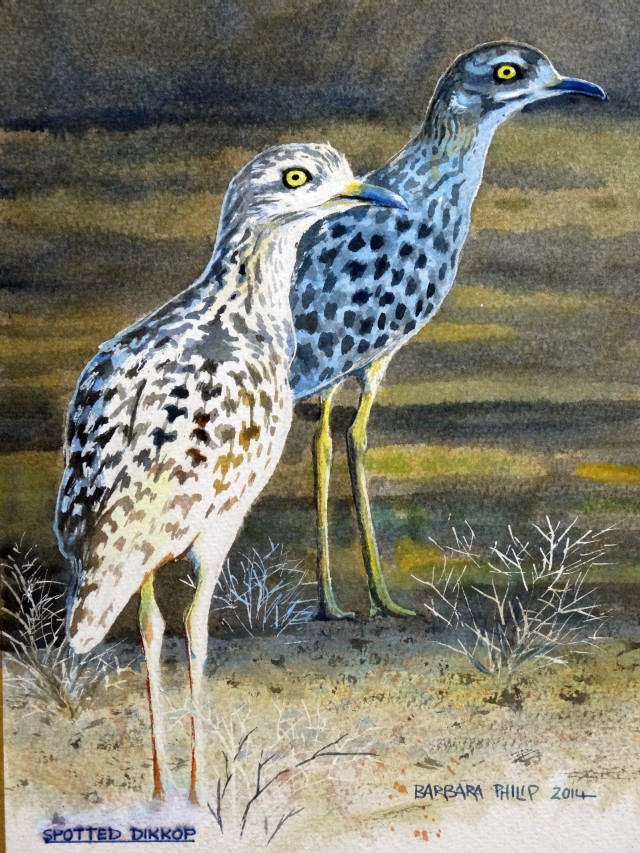
We have a resident pair of Spotted Dikkops ( Burhinus Capensis ), that nest not far from our house. I was fortunate to capture a photo of them last year, and have since been longing to turn it into a small painting.
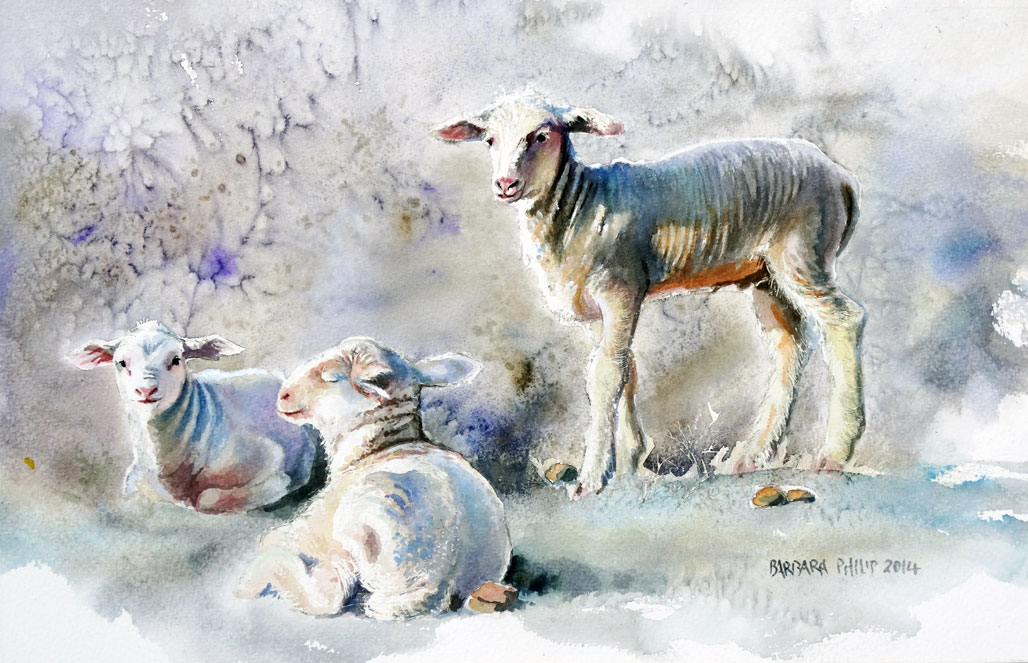
A little experiment with salt to achieve a different texture, on this sketch of 3 lambs.
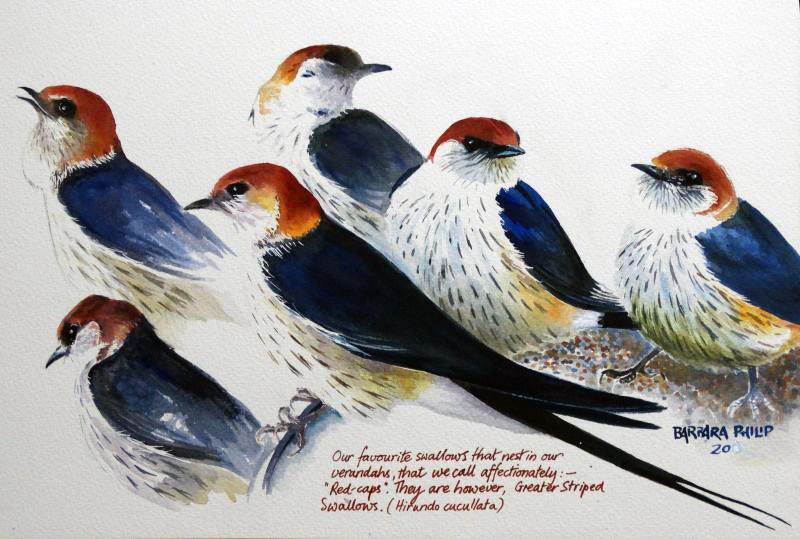
We are always delighted when our favourite swallows, the Greater Striped Swallow ( Hirundo Cucullata ) arrives for the summer. We love their contented warbling song/chatter, and wistful call. Now that the summer is almost over, they will soon be leaving for northern parts. They are delightful residents of our verandahs, with their mud nests characterized by long tunnel entrances. We call them ‘Red Caps’ due to the russet colouring on the top of their heads. This year, I was able to get some good photos of them, which inspired this little study. We also have the Whitethroated Swallow, ( Hirundo Albigularis ) , but the Red Caps are our favourites.
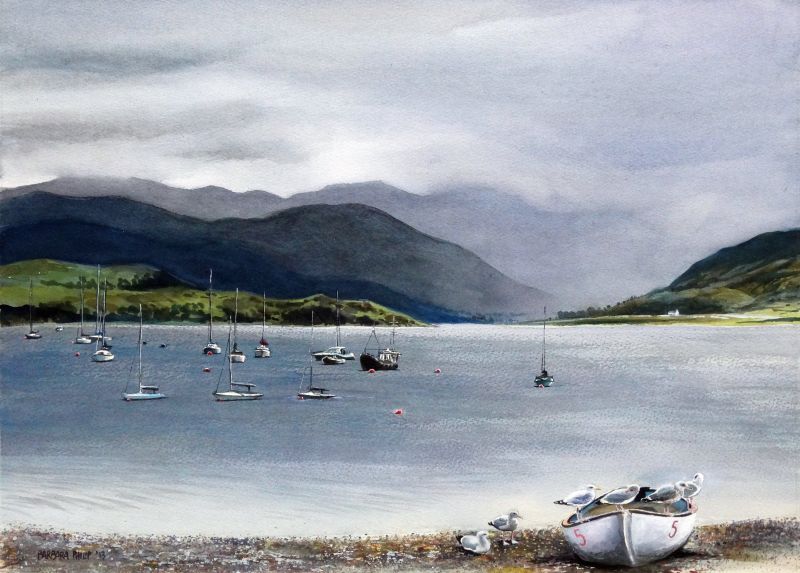
Although I have never been overseas, John went to Europe for a year when he left school. So this was the first ‘out of Africa’ trip for me.
We decided to take the plunge, when our son, Charles and his wife Janet, had their first baby, beautiful Kayla Skye, in Edinburgh earlier this year. So armed with a new camera and high expectations we left for Scotland early in September.
The new camera worked really hard and produced a wonderful collection of over 7000 photos! But, just once in a while, I took the odd opportunity to do a few on-site sketches.
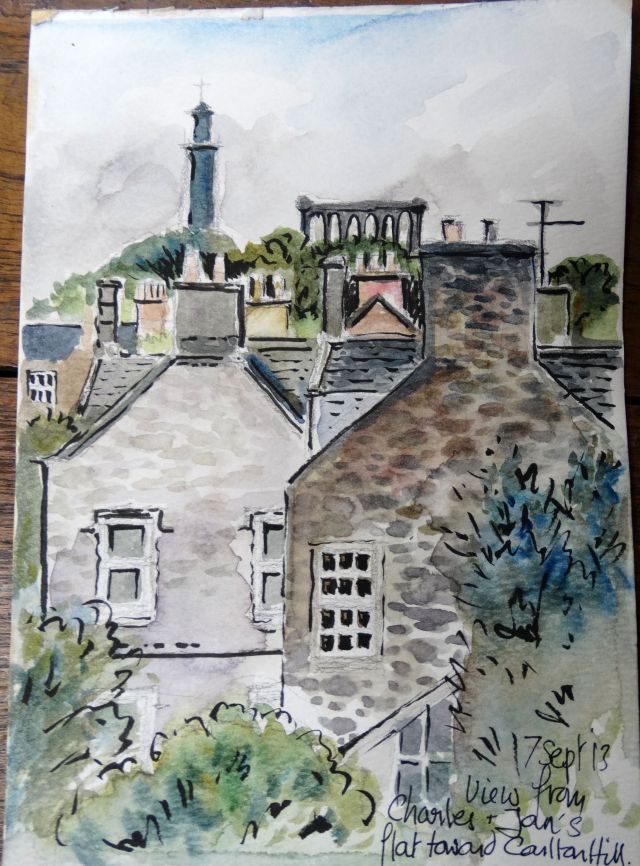
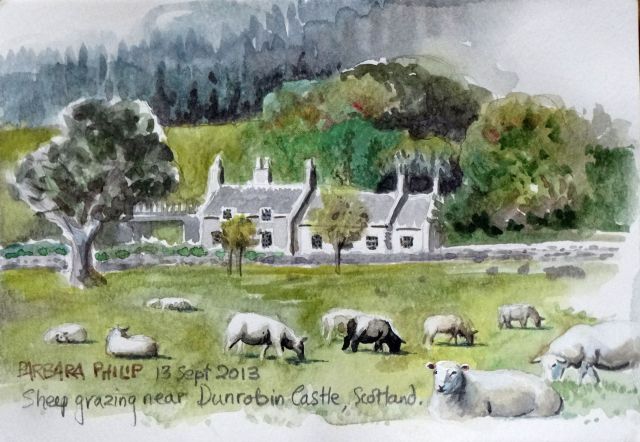
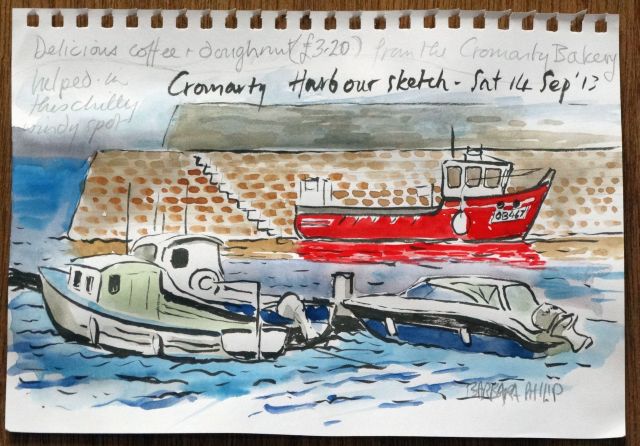
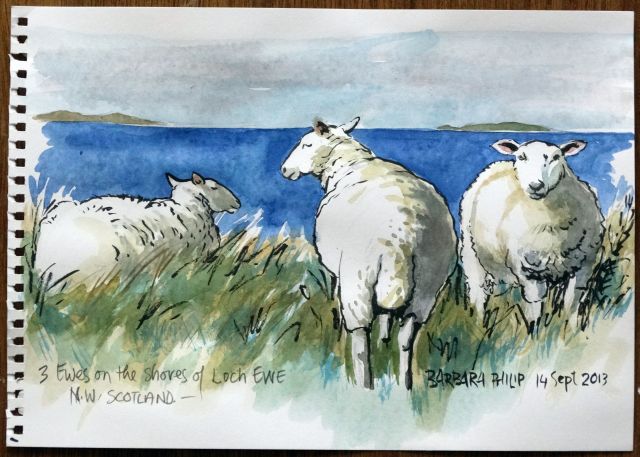
I was so inspired to paint when we got back that I picked out three favourites, to do more detailed watercolour paintings. There are others that I would like to try, but as the festive season is drawing near, I decided to stop with this little selection. It gives you a sample of the delights we found in the beautiful land of fat sheep, rolling green fields, bagpipes and tartan.
And once in a while a little rain was such a treat for us drought-hardened karoo folk!
These are the watercolours, painted since our return:

These four new painting commissions have kept me really busy over the past 3 months.

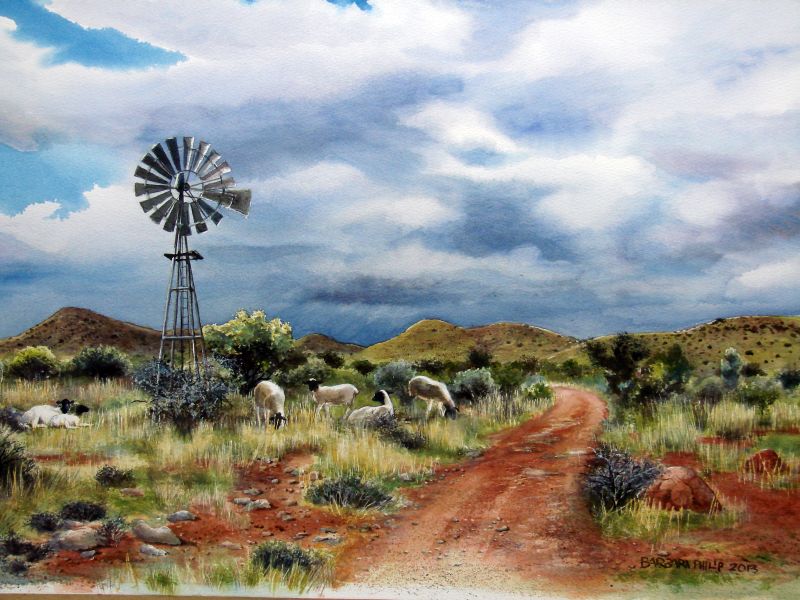
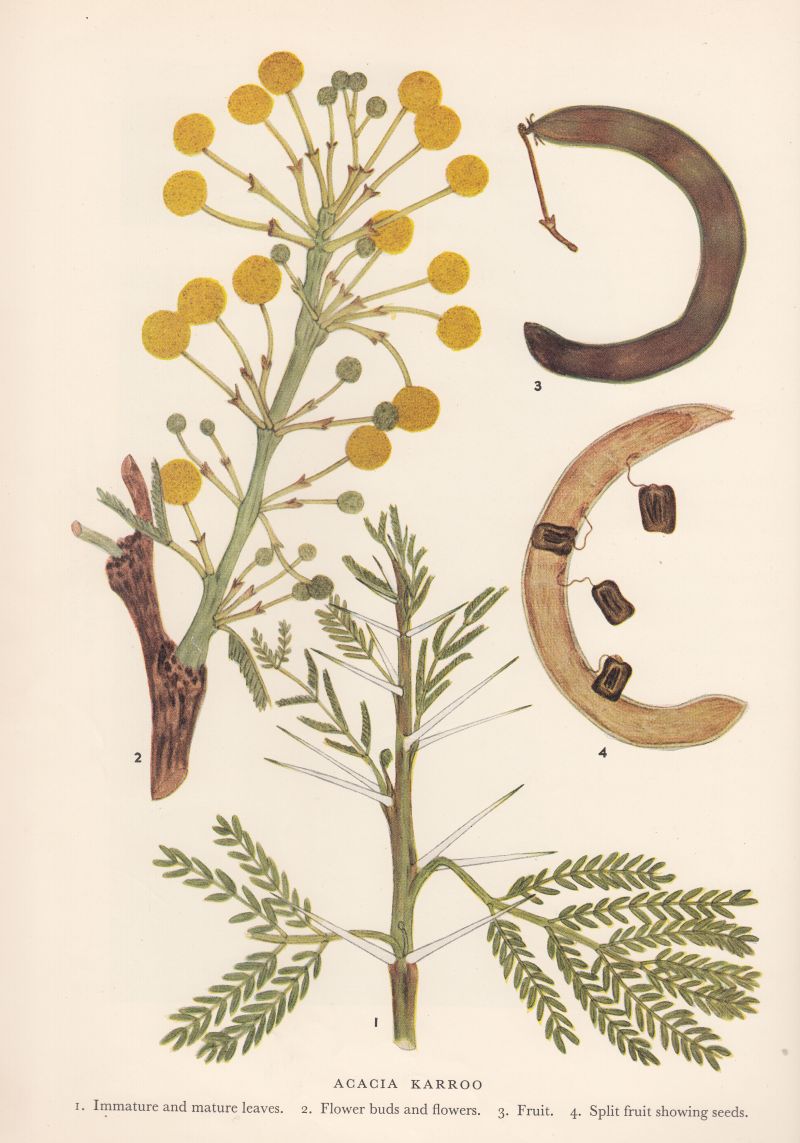
Having grown up in a family of botanists, it is hard to separate myself from the African bush and beautiful flora that was a big part of my youth. Acacia Karroo is a species of thorn tree, that is unique in that it grows naturally around here in the karoo, where we live in South Africa, and is also to be found around Salisbury ( Harare) and many other parts of Rhodesia, (Zimbabwe) where I grew up. I never really pursued a botanical career myself, as did my brother, John Burrows (http://www.bknr.co.za/), who has written several wonderful scientific botanical books. I also don’t have many tree books, except one old treasured copy of, “Trees of Central Africa” by Keith Coates Palgrave. This book plate of Acacia Karroo, is beautifully painted by his mother, Olive H. Coates Palgrave.
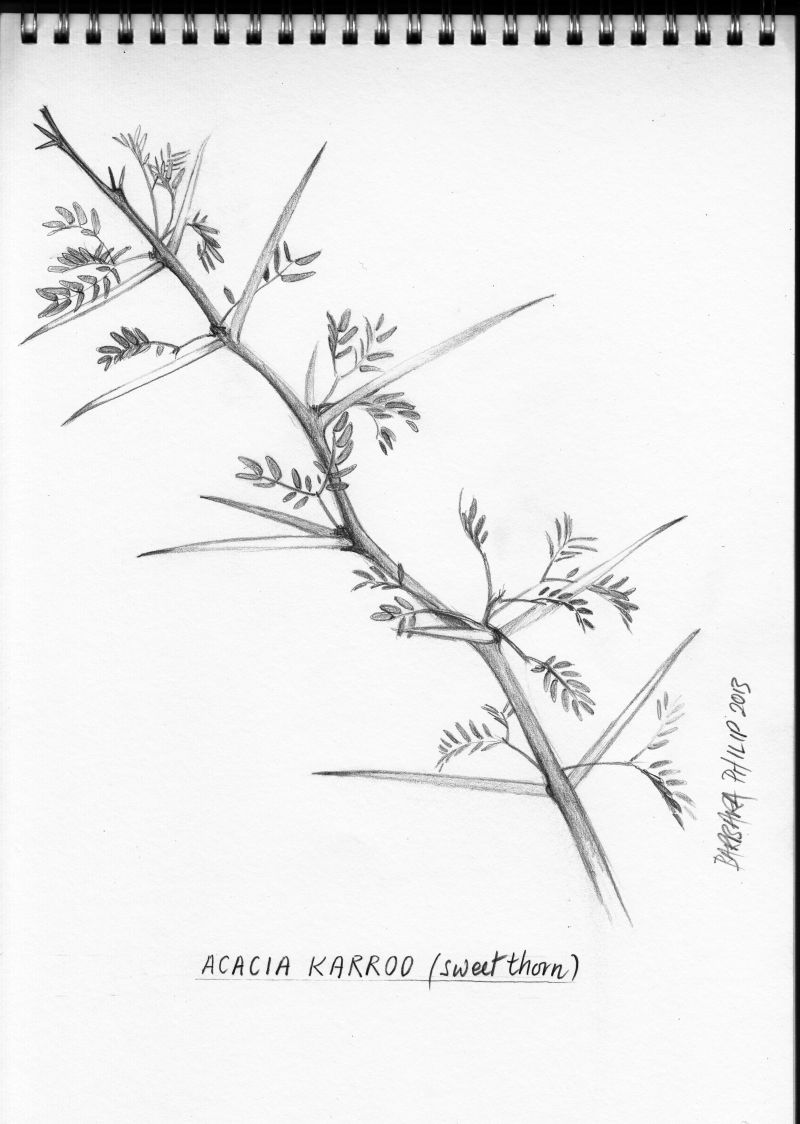
I do not aspire to being a botanical artist like my talented sister in law, but this pencil sketch was done in the spirit of this study.
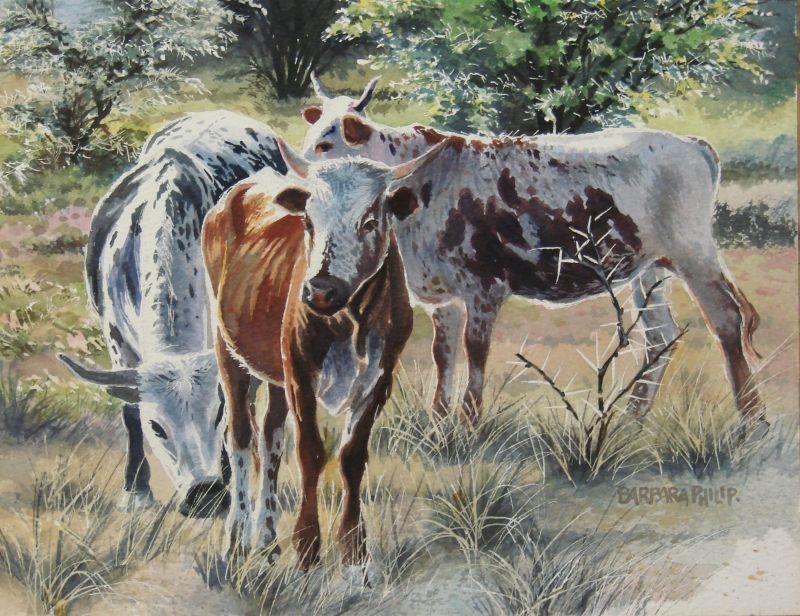
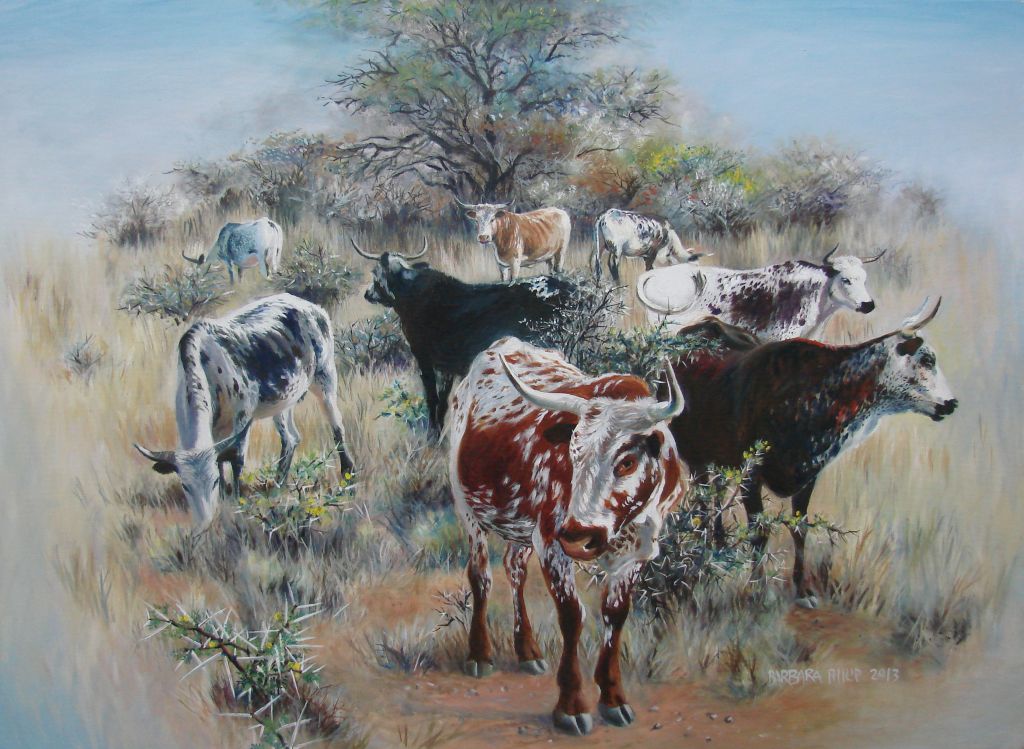
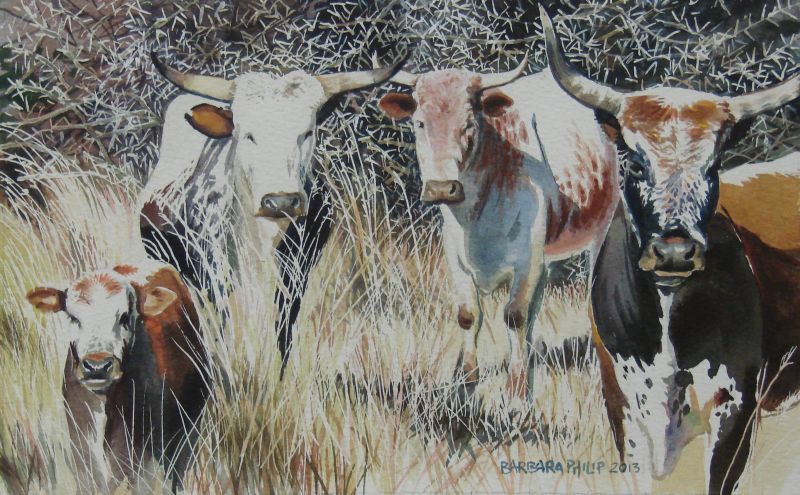
I wanted to explore the visual contrasts between the Acacia Karroo, and the Nguni cattle that are often seen grazing amongst them. The patterned hides of the Nguni cattle, against the network of white thorn-covered trees was an interesting contrast, and the focus of this series of these 3 paintings.
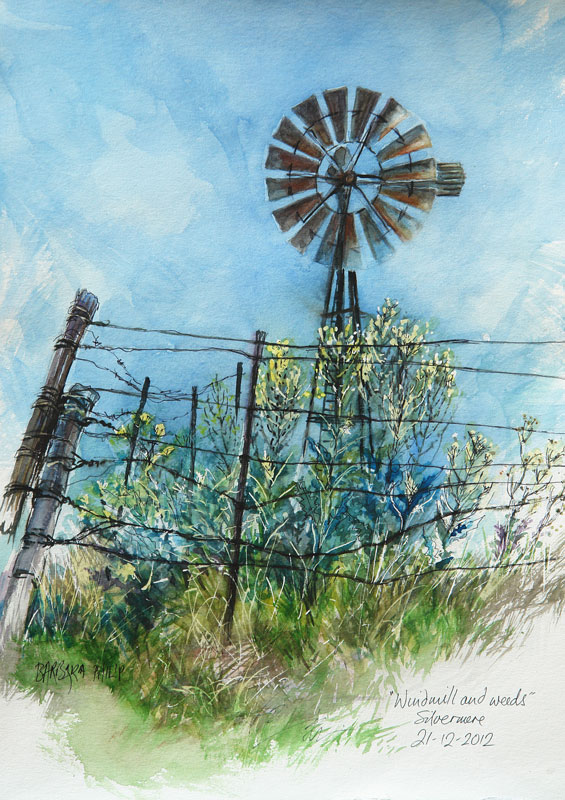
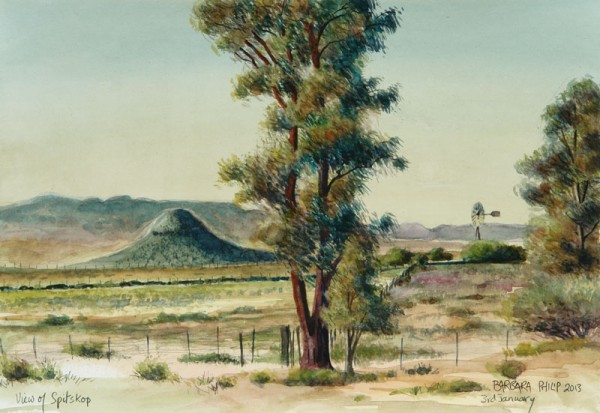
John and I could not resist the temptation to take on another painting-a-day challenge when he came home for the Christmas holidays. It was perhaps even more challenging to find scenery or subjects that we had not done last year. So, even though this Christmas threw in some extra complications, like a new granddaughter, which meant that there was not always time to fit in a painting session each day for me; but John did succeed in his aim to do a painting a day. Here are the sketches from the 15 days of the challenge. All of mine are 400 x 320 mm. which is close to the standard A3 format.
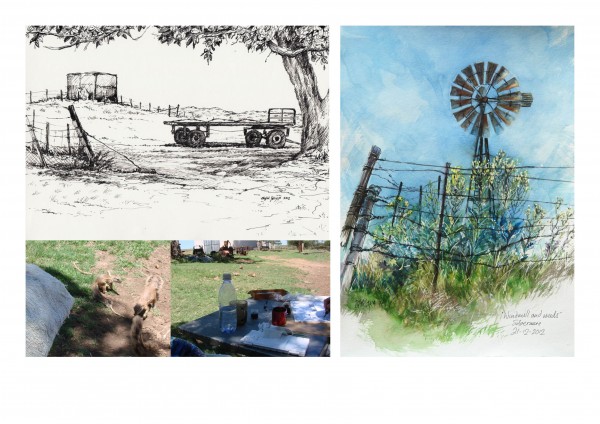 Day 1.—- 21 Dec.2012 Behind the workshop. We painted different scenes while still sitting next to each other. The resident Ground Squirrels were so curious that they came to see if they could find anything to eat in the basket next to my chair ! John’s pen & ink drawing is on the left and mine is on the right.
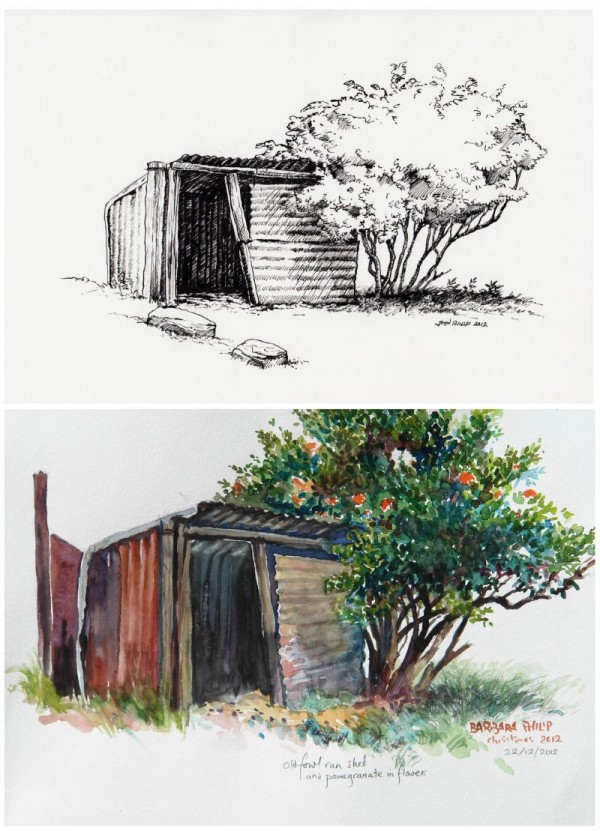
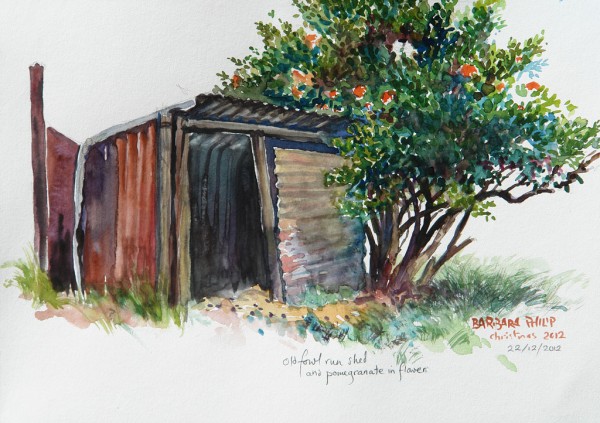
Day 2. —- 22 Dec.2012. The old fowl run behind the house. This time we did the same scene. John in pen & ink is the top picture. Mine is below.
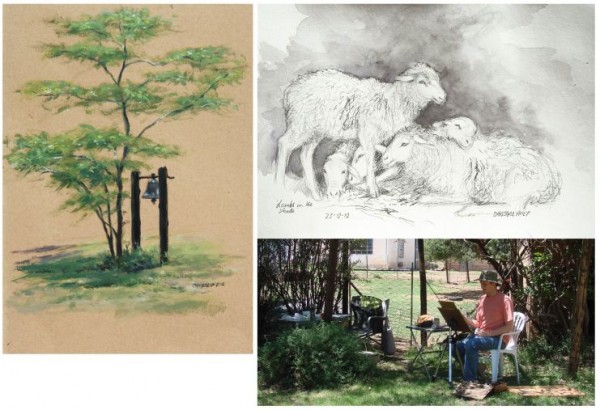
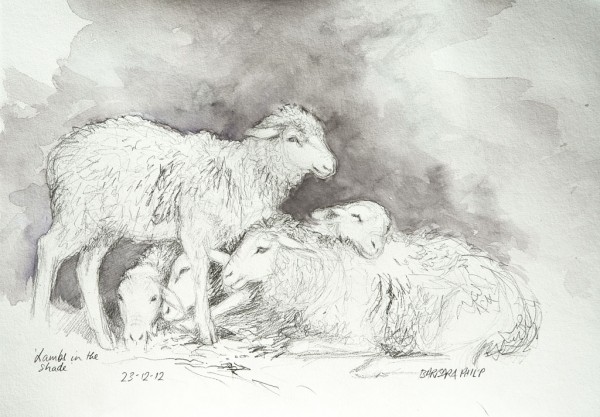
Day 3.— 23 Dec 2012. Sketching in a small patch of shade near the garage. We chose different subjects: John, the bell and tree that I have painted before, and I chose to sketch the lambs that were also squeezing into the same patch of shade, on the other side of the gate. It was fun to stick to a black & white pencil study, with a grey wash background.
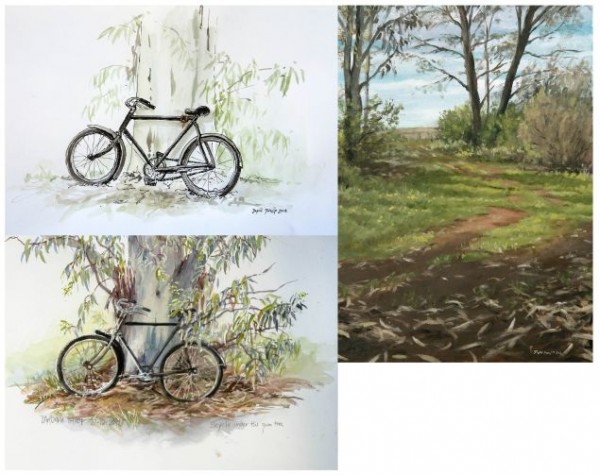
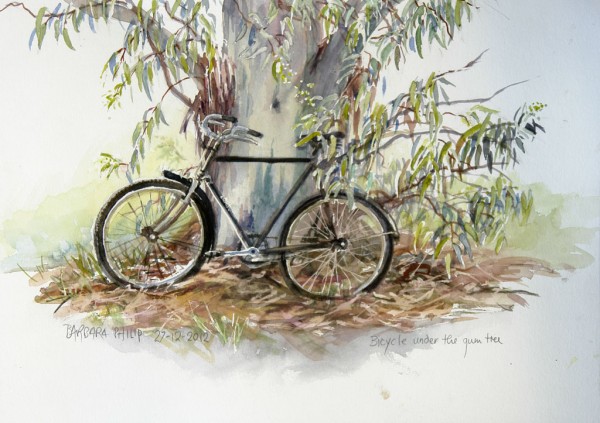
Day 4 & 5. — 24 Dec 2012. Christmas Eve was a particularly busy day for me, so John sketched alone,… the bicycle under the gum tree. His is the top sketch on the left. Whereas, on Day 5, Christmas Day, I was free to sketch the bicycle scene. John then turned his attention beyond the tree to the road that leads to the grid. He painted that scene in oils.
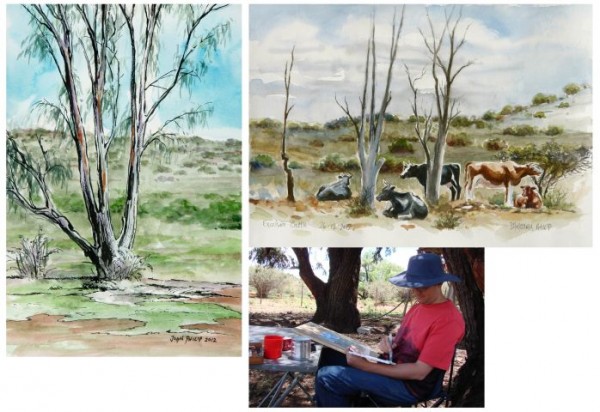
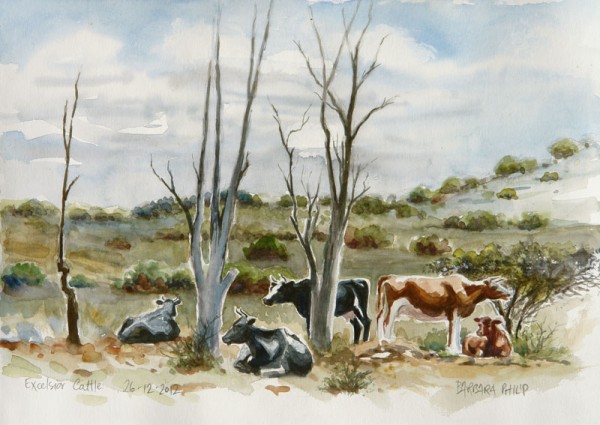
Day 6.—26 Dec.2012. Sketching at Excelsior. While John concentrated on one of the gum trees, I was more fascinated by the cattle under the gums.
————————–
As my delightful little granddaugter and her parents were leaving for their seaside holiday on the 29th, I decided to give up sketching and spend more time with Sue and Chloë.
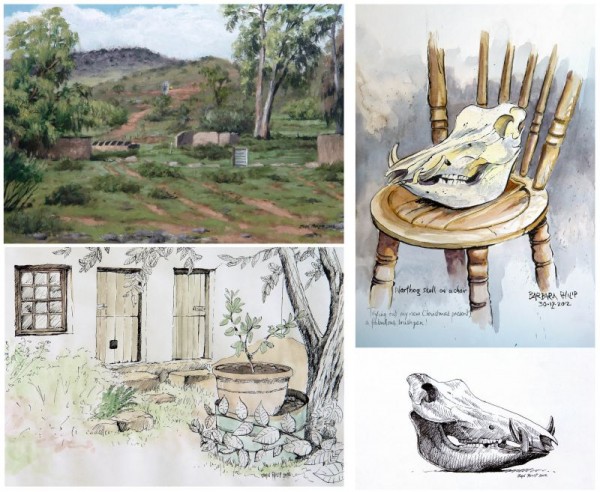
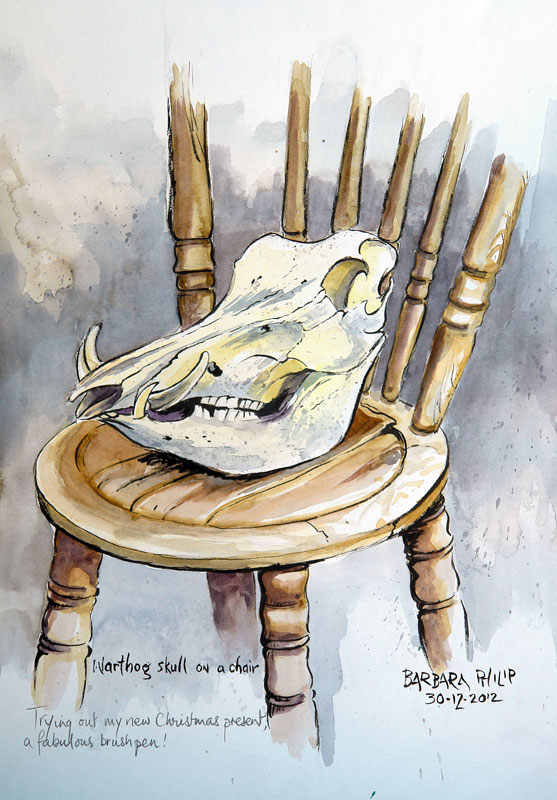
Day 7, 8 & 9. —-27 – 29 Dec 2012. The warthog skull and other scenes. While I spent time with Chloë & Sue, John painted the scenes top left, and the pen & ink of the warthog skull, bottom right. Then on Day 9 when Sue’s family had left, John and I sat together and did the other 2 sketches. I liked the skull but decided to put it onto a chair in the gardern where we sat. John chose the scene of the two store room doors and window.
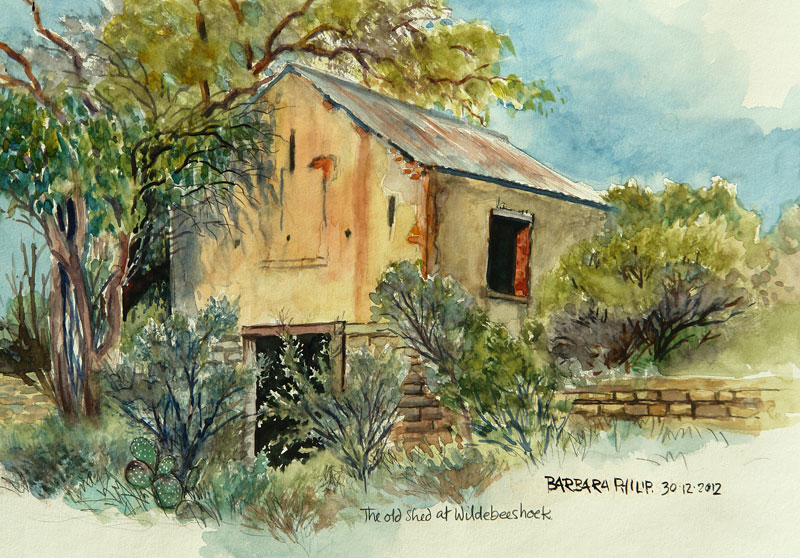
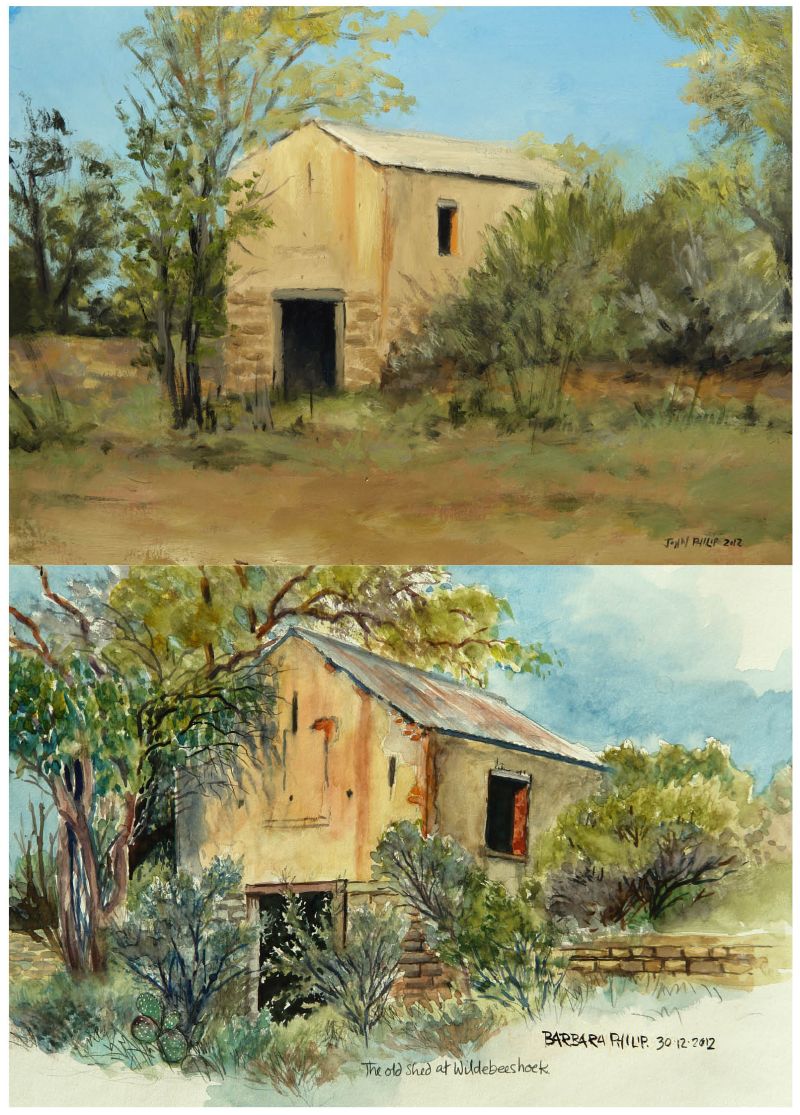
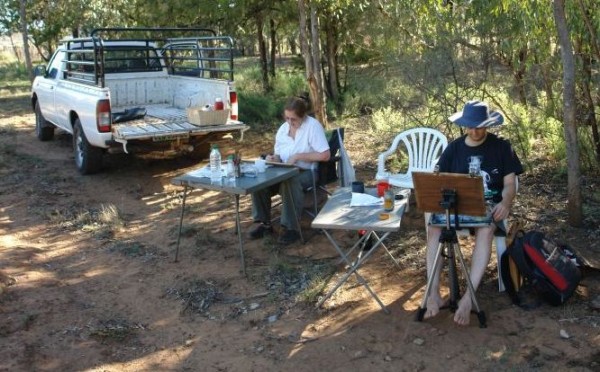
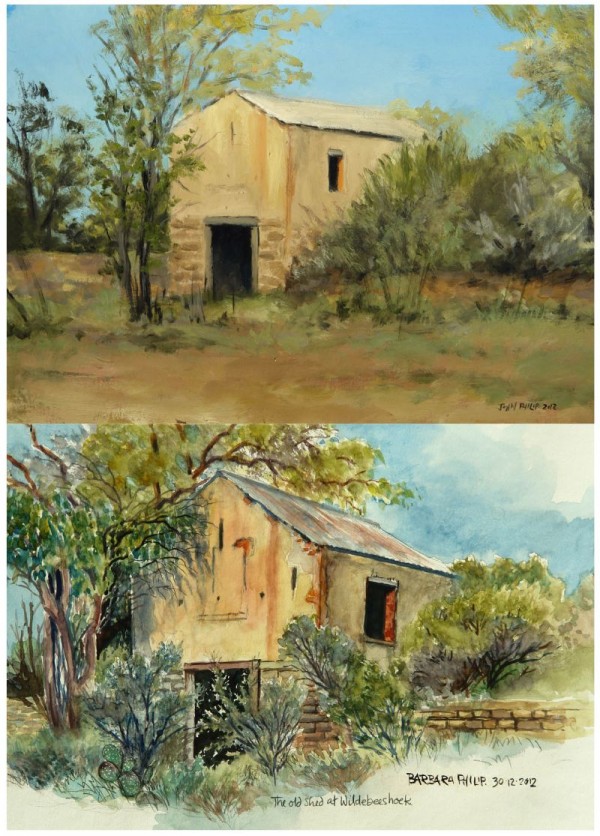 Day 10. —30 Dec.2012. Old Wildebeeshoek shed. This is on our neighbour’s farm and was great fun to do. Below is a picture of the two of us painting the scene.
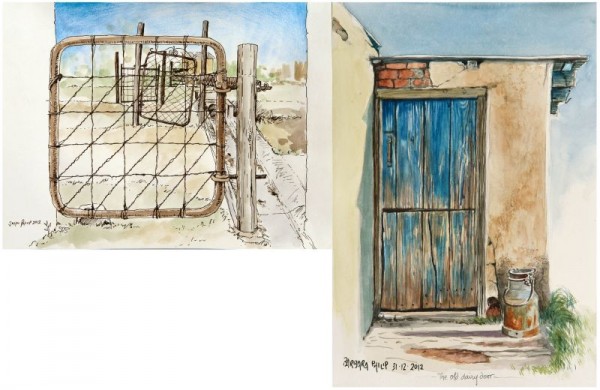
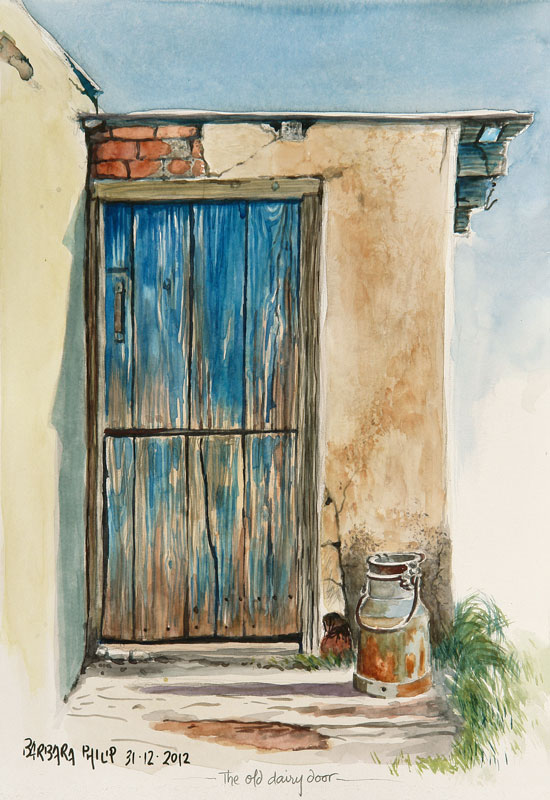
Day 11.— 31 Dec 2012. New Year’s Eve. Dairy session. The quest to find a shady spot always dictates the subject of our painting during the HOT, HOT days of summer. We found a little patch of shade between the stable building and the dairy. We could not sit side by side because it is a narrow passageway, so we sat with our backs to each other facing in opposite directions. John did the series of 4 gates, and I did the blue door of the Old Dairy.
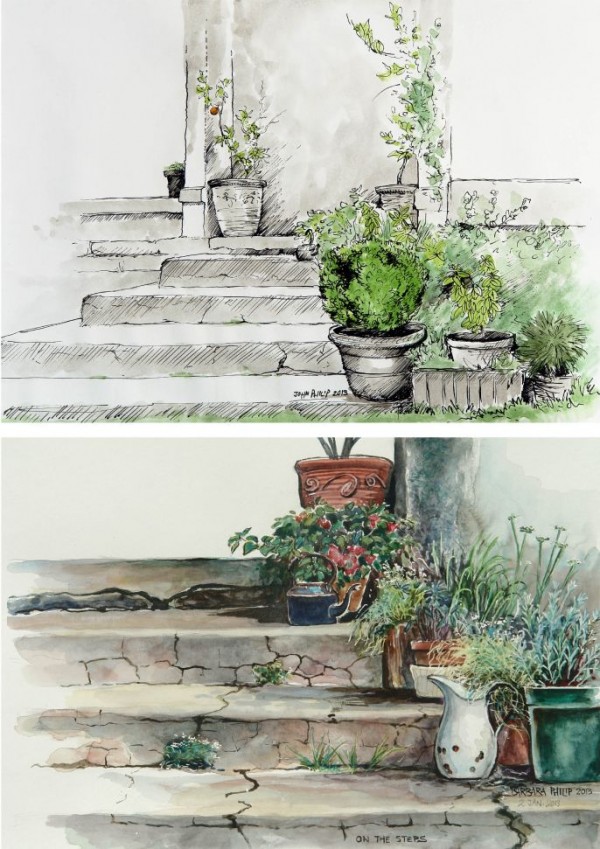
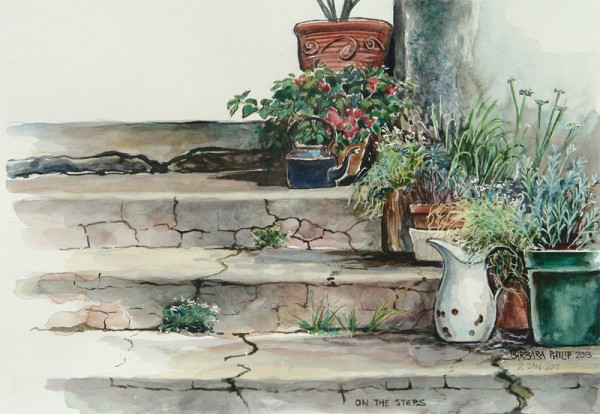
Day 12 .— 1 Jan.2013. New Year’s Day. The Front Steps. John’s is the top sketch.
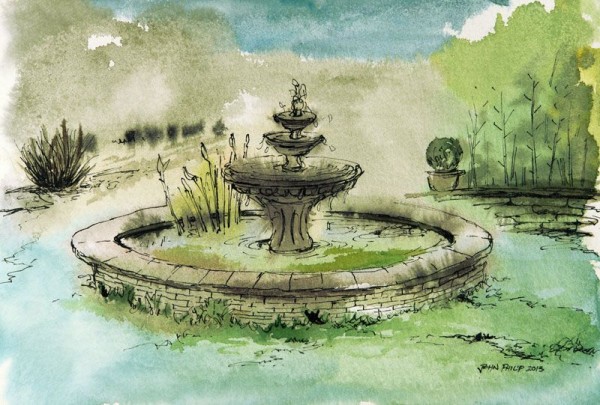
Day 13. — 2 Jan 2013. I put too much detail into the “On the Steps” picture that it got too late and the light was poor, so I had to finish the next day. While I did that, John did a lovely spontaneous sketch of the fountain.
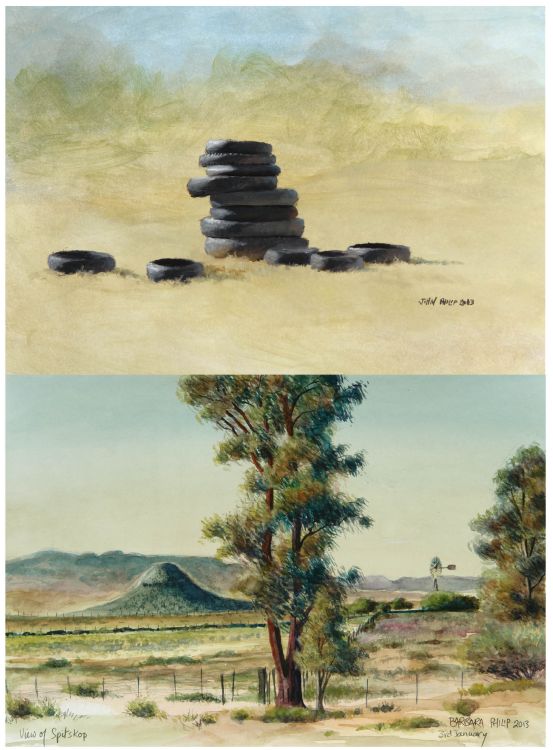 Day 14. —3 Jan 2013. Old tyres and the view North. We sat together again, but did not paint the same scene. We were under the big gum trees near the Pig-sties. John chose to isolate a pile of tyres nearby, in oils ( top picture); and I chose the far scene beyond.
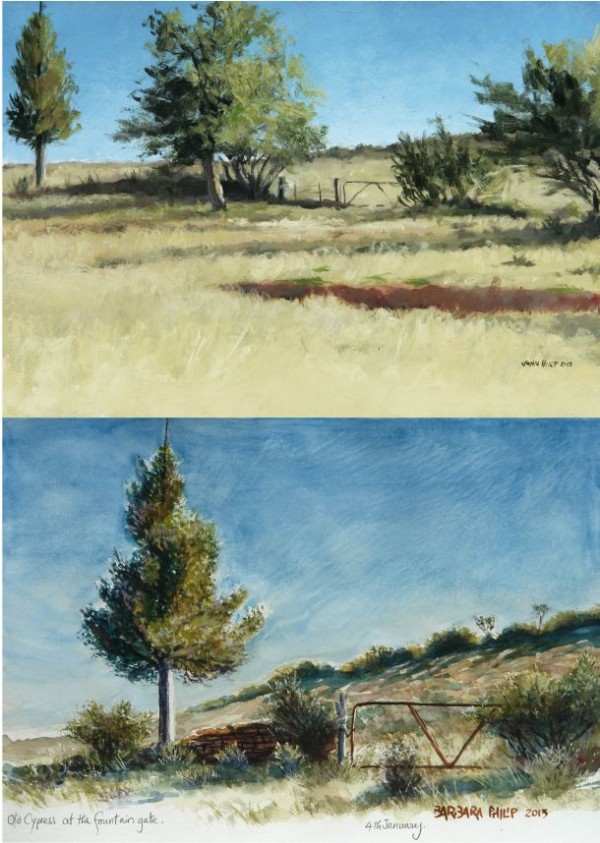
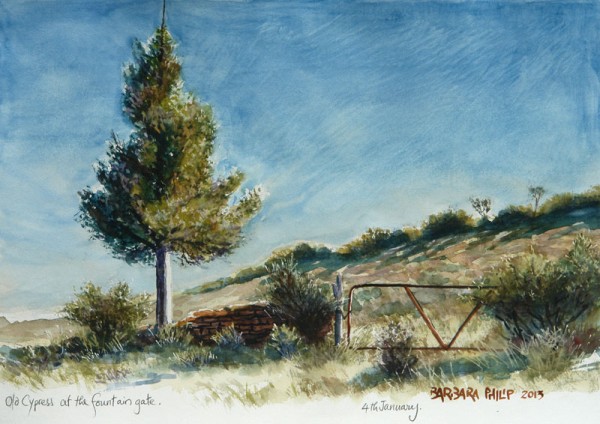
Day 15. — 4 Jan 2013. The Fountain Gate. Our last day of the challenge! Although we chose the same scene, I particularly wanted to concentrate on the cypress tree, so eliminated the tree that was close to the gate. It is called, ‘artistic licence’ I think. That is why our scenes look different. John’s in oil, is at the top.
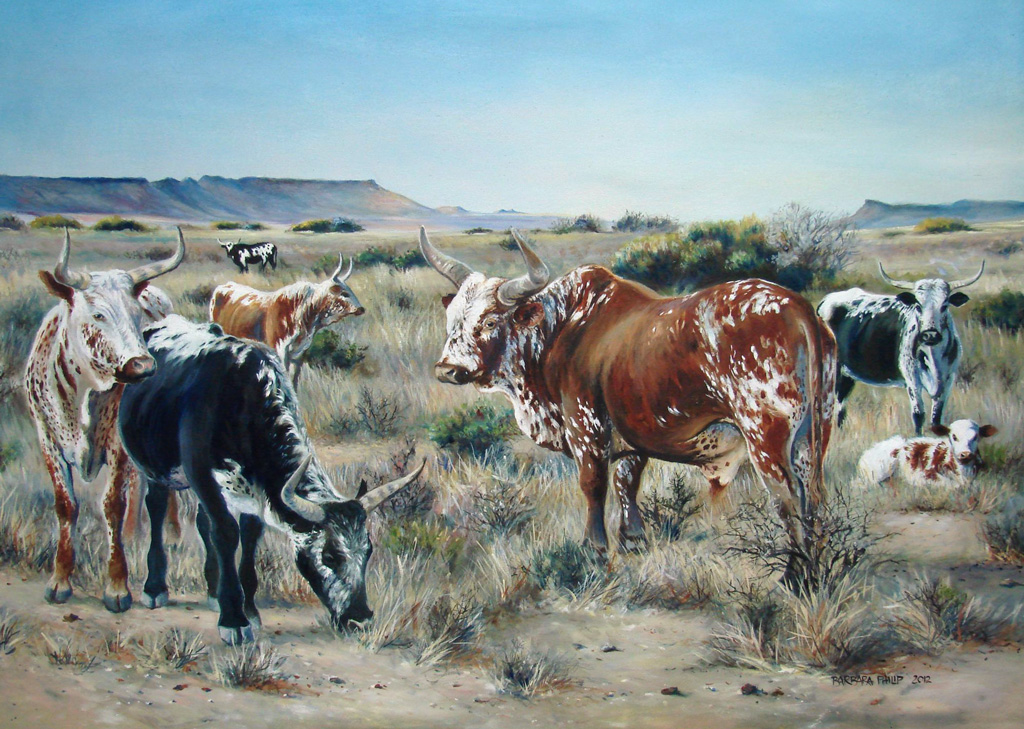
After receiving another Nguni painting order a few months ago, I was determined to find a new herd to use for this composition. Although I have loads of pictures of Ngunis from various sources, and Nguni stud books going back almost 10 years; the animals in all the various sketches I made, did not relate to each other. This sounds like an insignificant detail. But in order to throw a good measure of life and enthusiasm into the painting, I felt the need to find a fresh new herd. I subsequently heard about a renowned Nguni breeder not far away on the farm ‘Gelykfontein’ between Venterstad and Colesburg.
When John and I paid him a visit, we were totally captivated by all the wonderful Ngunis that we saw and photographed. As a result there were loads of inspiring photos available for this composition.
I then went ahead enthusiastically, and printed up a small batch of photos to start with some new sketches; but as often happens when things go so well, my computer crashed and all my photos were trapped and inaccessible!
The computer went off to Johannesburg for repairs etc, and I was left with only that initial batch of photos that had been printed. How fortunate that I had those at least; and it was enough to get going and build up a satisfactory composition, and at least I had the fresh inspiration in my mind to launch into the project.
I naturally enjoyed using a karoo landscape and background for this painting as it is the countryside we live in, and love ; and the cattle seemed quite at home where they were placed in the scene. Getting the composition right, is always challenging, with considerations like the direction of the light and the way the eye travels in and on towards the distance. There were several times when I wished I had access to all those other lovely photos on my computer (still in Johannesburg). However, it is amazing that it worked out quite adequately in the end, and I have a faithful Lord to thank for that.
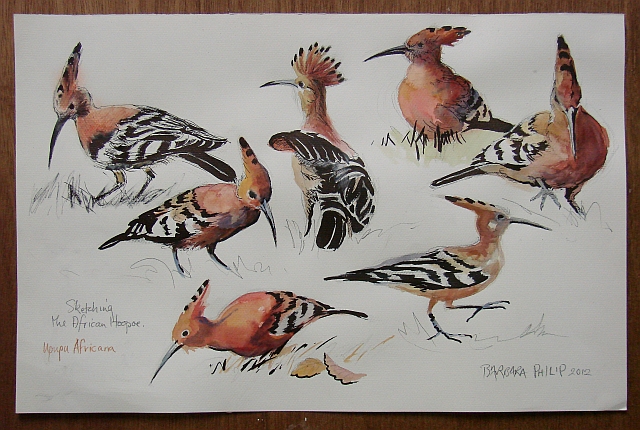
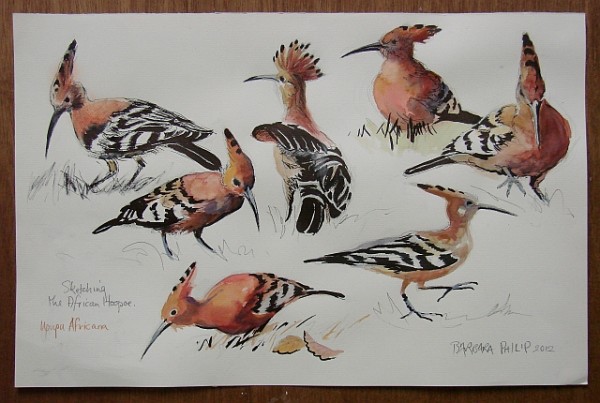
Killing time while I wait to start my next big Nguni, I decided to do something different, Hoopoes. We have a pair of African Hoopoes in our garden; so there are several perfect photo opportunities. I do want to do a proper painting again, ( I did one many years ago) but decided to just do some rough sketching for now. This afternoon we are going to photograph an Nguni Stud, at Gelyksfontein, on the road to Colesburg.