Category: Blog

  • Burgersdorp’s Spring Somerfees.

    Burgersdorp’s Spring Somerfees.

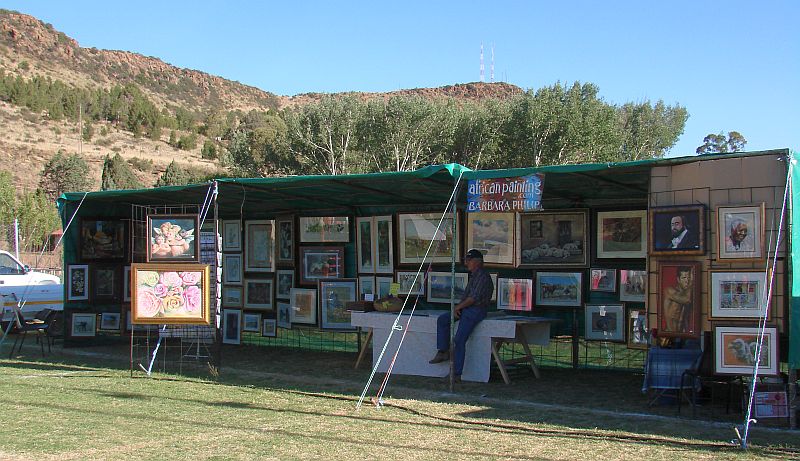
    We have just spent 2 days (14 & 15 October) at the Burgersdorp Somerfees. It was the culmination of weeks of painting, framing, card making and endless packing & preparation. John had framed 24 new pictures, and big folders of unframed paintings featured more prominently at this exhibition that ever before.
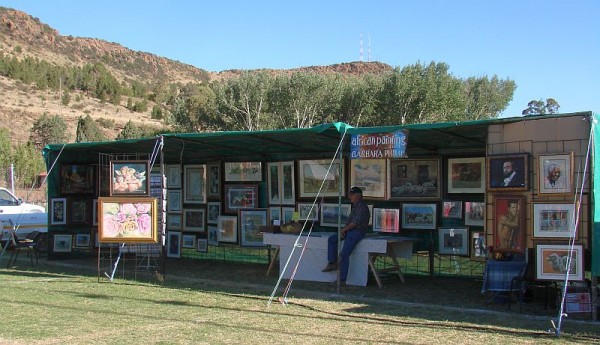
    Africanpainting stall, Burgersdorp Somerfees 2011
    Our stall, Burgersdorp Somerfees.2011

    We arrived early on Friday morning, at 6.30 am and spent most of the morning erecting the stands and planning where to hang all the paintings. But the wind was a constant nuisance and by the end of Friday we thought it had all been a big mistake! Our first day was nothing short of disastrous and the very strong north-westerly wind blew all the cards and anything that was not tied down. We were also told that our north-facing tent structure had blown over on Thursday night! So we requested some extra ropes and tent pegs to try and secure it more firmly but with every gust of wind the whole roof ballooned; the structure shuddered & shook; and all our paintings rattled precariously on their stands. By the end of the day, with thunder and lightening looming and the wind gusting continually into our stall, we decided to pack up all 65 paintings again, and bring them home for safety-sake! I had taken photos of the arrangement of the paintings on Friday, which made it a simpler process, early on Saturday morning to remember the position of each one, as we re-hung them again. Saturday morning was a beautiful sunny and mostly windless day, so we could confidently pack out all the cards and calendars into the card-stands and lay out the folders of unframed paintings on the big table; along with the smaller items like gift tags and bookmarks.
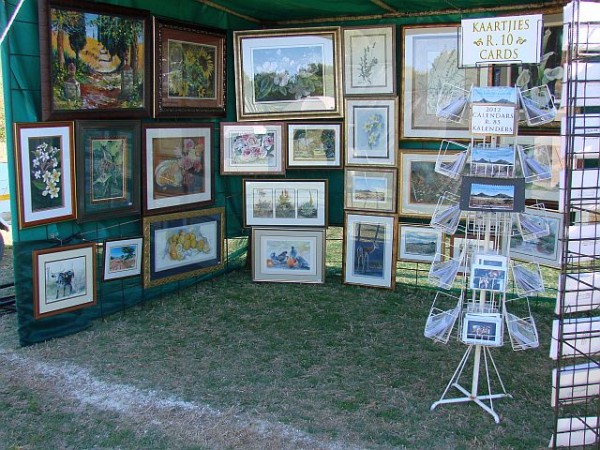
    The east end of the tent and the revolving card stand.
    The east end of the tent and the revolving card stand.

    Saturday also brought many more people enjoying a day out at the festival, and lots of familiar friends & visitors to our stall. With the state of the economy we did not expect to sell much, but felt that the exposure was important. Many of the local folk had never seen our painting display before.
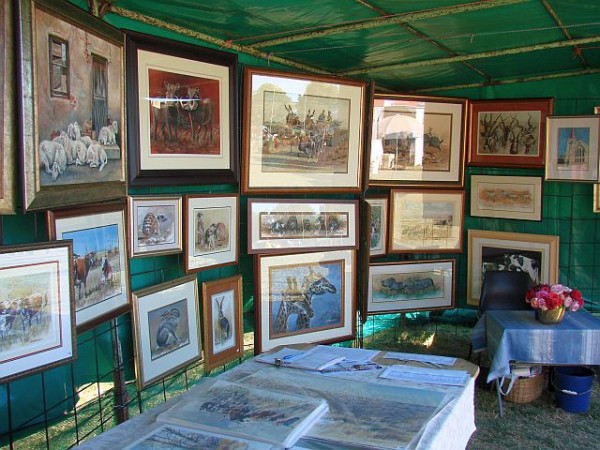
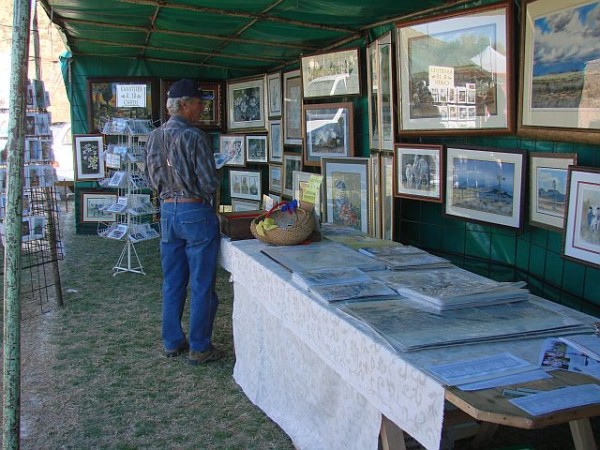
    west end of the stall
    west end of the stall

    Ultimately, we were really fortunate to sell a couple of paintings along with several cards and calendars.
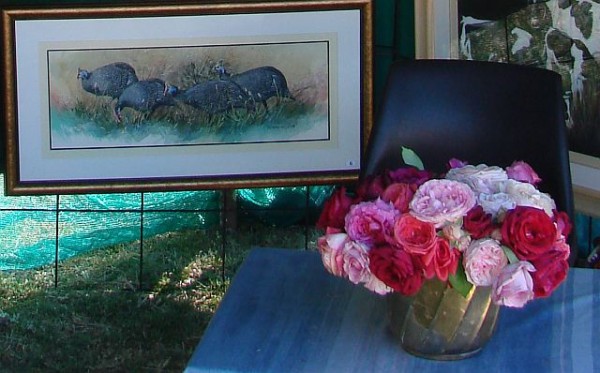
    A small vase of the first fragrant roses of my spring garden to brighten the display.
    A small vase of the first fragrant roses of my spring garden to brighten the display.

    How wonderful it was to see so many old friends that we have known for years, and to meet many new visitors to the festival who had come from neighbouring districts. Their warm-hearted friendliness & enthusiasm certainly has made it worthwhile in the end. I am even hopeful that there may be a few orders to follow, and those are always a welcome bonus!!
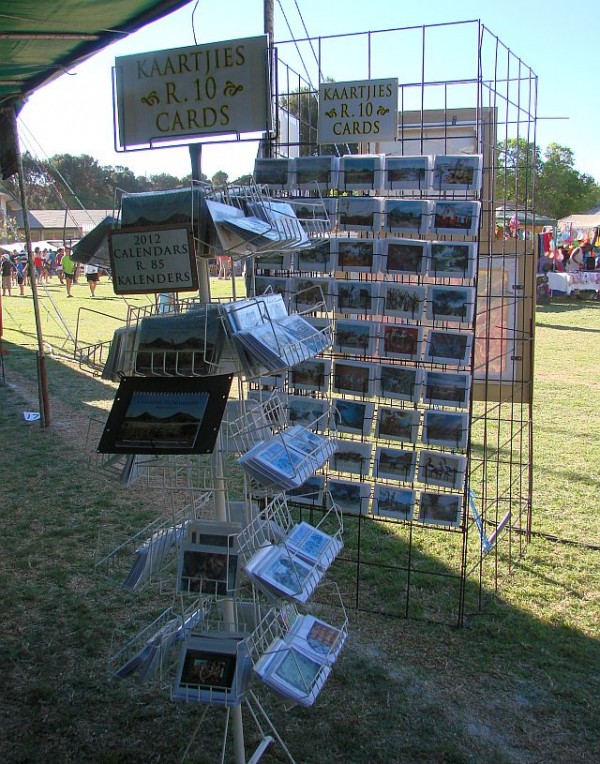
    The card stands.
    The card stands.
    John in the stall
    John in the stall


  • Road through the Mopanes

    Road through the Mopanes

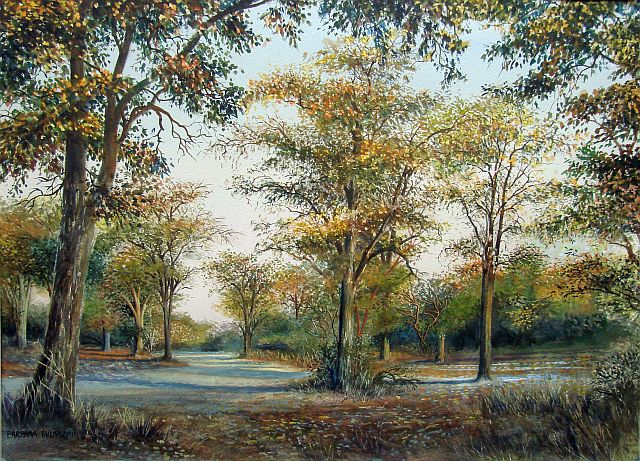
    In the recent post entitled, ‘Karoo Interlude’, I mentioned that in my youth, on travels with my family we covered most of Rhodesia; (Zimbabwe) while researching the trees species that were my father’s particular interest. We often travelled in the area between Bulawayo and the Victoria Falls where large forests of Mopane, Teak and Mahogany grew abundantly, as well as many other beautiful trees. This watercolour is reminiscent of those wonderful forests and painting it was a deeply nostalgic process for me !

    Mopane Trees.
    Road through the Mopanes. Watercolour. 700 x 500 mm
  • A little Study of the Cape Hare

    A little Study of the Cape Hare

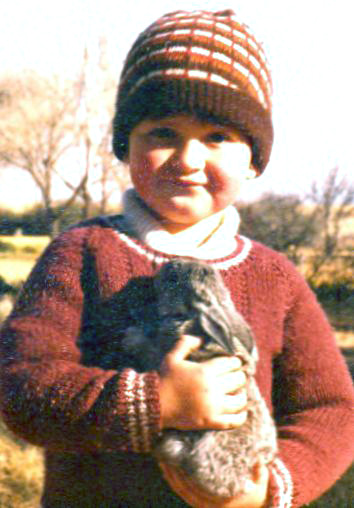
    Thirty years ago, our son, John Oliver was given a little rabbit called Flapsocks. He was a delightful and soft little bunny, and as these things happen, time passed and we got more rabbits and later guinea pigs too.

    photo of John and Flapsocks

    The wild Cape Hare that we have now, is bigger than a domestic rabbit; but whenever I see him hopping about in the garden, I think of Flapsocks.

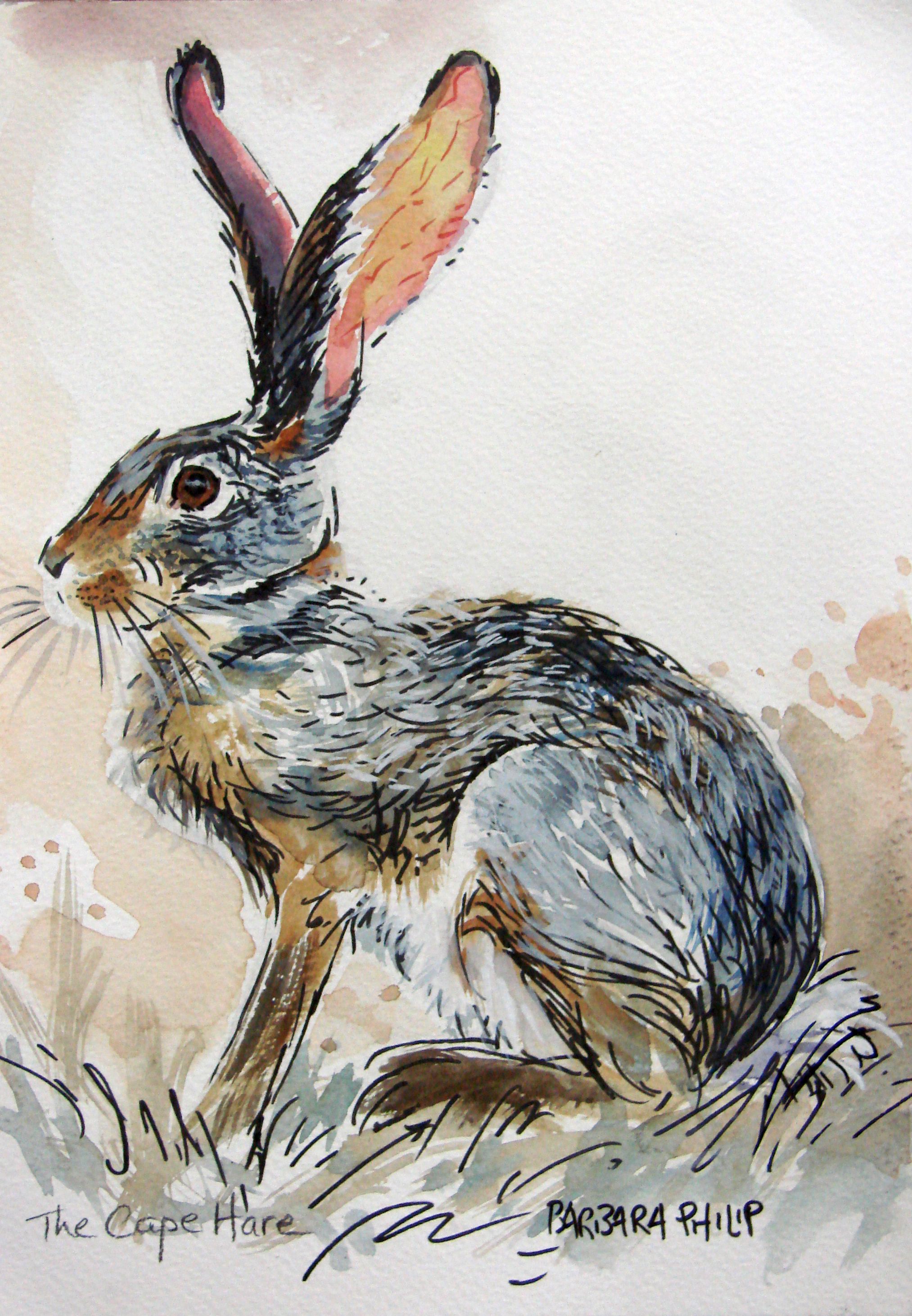
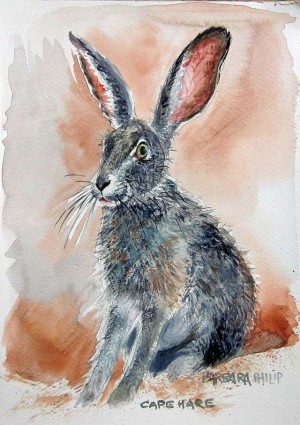
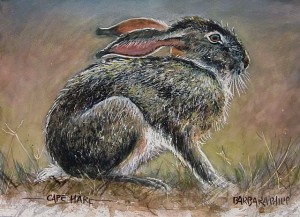
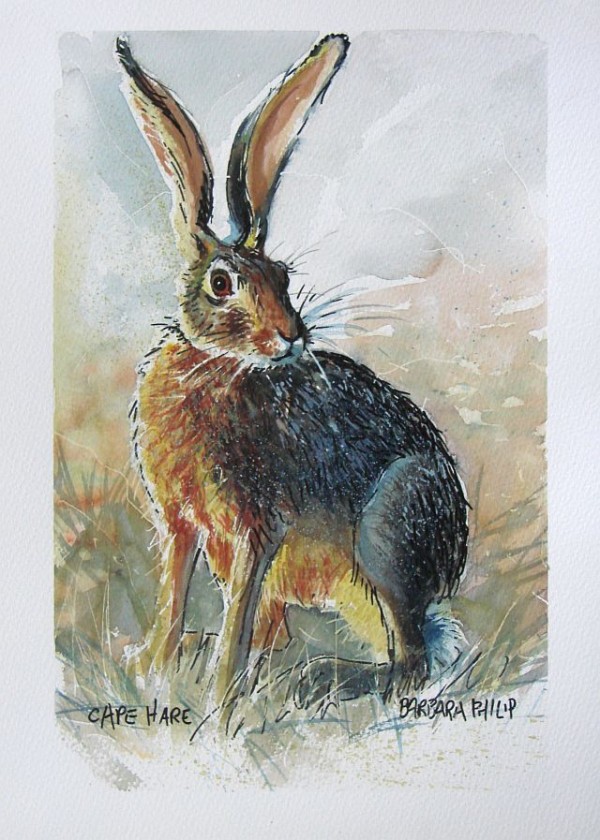
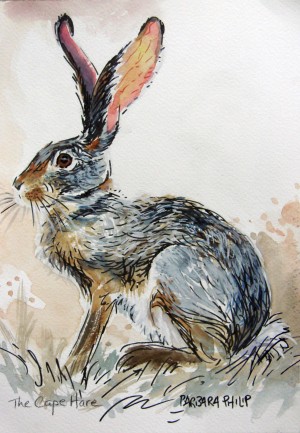
    Since the Cape Hare has been feeding in our garden quite often recently, I have taken some photos, with the intention of doing some sketches. Unfortunately my photos were of poor quality, so I found a few good ones on the website : ARKive and have worked from those. It has been an enjoyable little excursion; and a reminder of Flapsocks, and those long ago days when our children were little.

    Cape Hare study 1
    Cape Hare study 1. Watercolour. 210 x 295 mm
    Cape Hare study 2
    Cape Hare study 2. Watercolour. 350 x 250 mm.
    Cape Hare study 3
    Cape Hare study 3. Pen & Watercolour 350 x 250 mm.
    Cape Hare Study 4
    Cape Hare Study 4. Pen and watercolour. 210 x 295 mm


  • Karoo Interlude

    Karoo Interlude

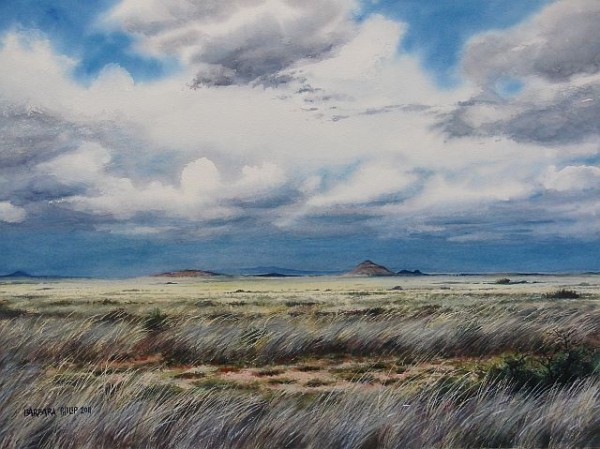
    Karoo-scape
    Karoo-scape. Watercolour. 500 x 700 mm

    When I first moved to Silvermere way back in 1978, I never thought I would get used to the vast treeless nature of the karoo landscape. It was such a dramatic change after all the wonderful woodlands of Rhodesia (Zimbabwe) where I grew up. As my father was particularly interested in botanical research and the trees in particular, we travelled extensively around the country to collect leaf specimens of tree varieties for the Herbarium in Salisbury (Harare). It was such an all consuming interest that our whole family became familiar with identifying the tree species with ease. My brother,(John Burrows) was particularly inspired, and has made a career out of this passion for plants. He has written several botanical books and continues to travel widely throughout southern Africa collecting, recording and photographing various plant species for his research.

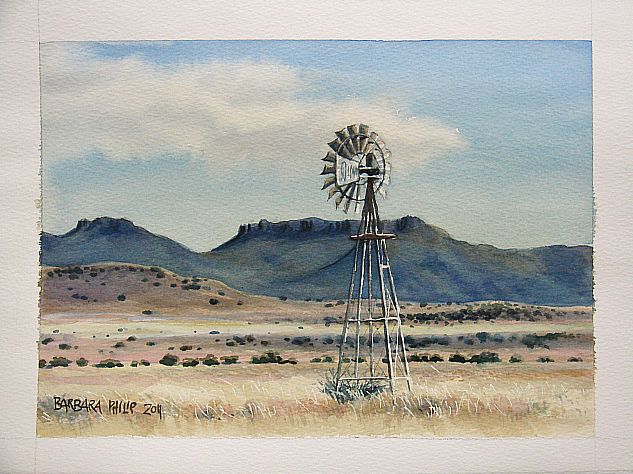
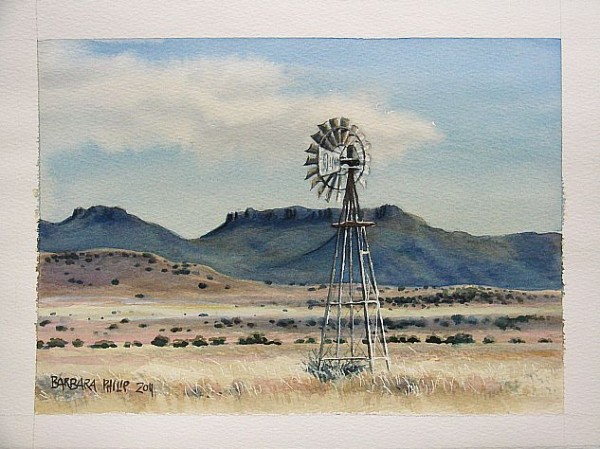
    Karoo hills & windmill.
    Karoo hills & windmill. Watercolour. 325 x 235 mm.

    However, despite this heritage, the vast, barren and expansive nature of the karoo has inadvertently crept into my heart. It has become one of my most stirring and favourite painting inspirations. I never tire of photographing it as we crisscross the karoo on every available little holiday adventure. We have travelled so many of the little dirt tracks & farm roads to find new vistas and quaint treasures that would make good painting subjects. We avoid the main tar roads as often as possible, and have covered most of the central & eastern Karoo, as well as Namaqualand, the Northern Cape and the Freestate. But there is always something new over the next horizon, and I doubt that my appetite for these beautiful arid landscapes will ever be exhausted.

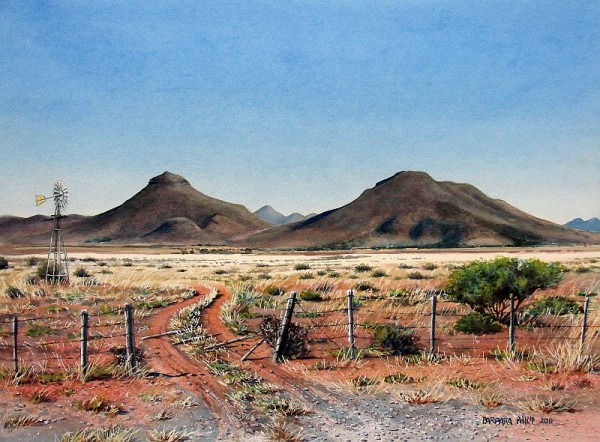
    Karoo farm road
    Karoo farm road. Watercolour. 700 x500 mm


  • Rock Pigeons over the Sunflower Fields of the Freestate.

    Rock Pigeons over the Sunflower Fields of the Freestate.

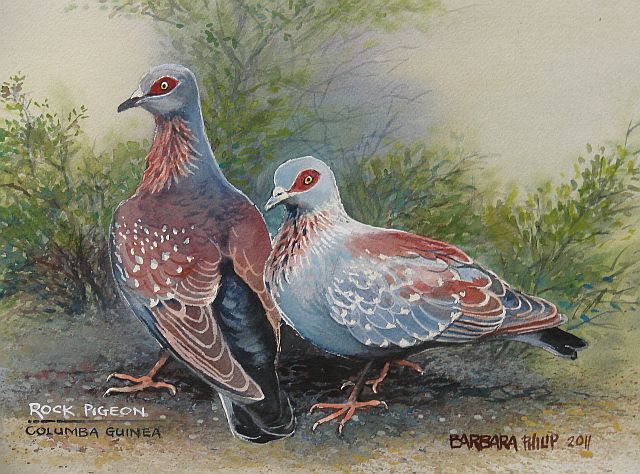
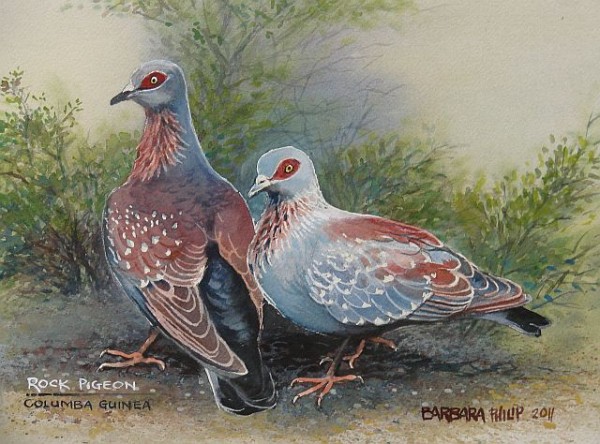
    2 rock pigeons
    2 rock pigeons. Watercolour. 330 x 240 mm.

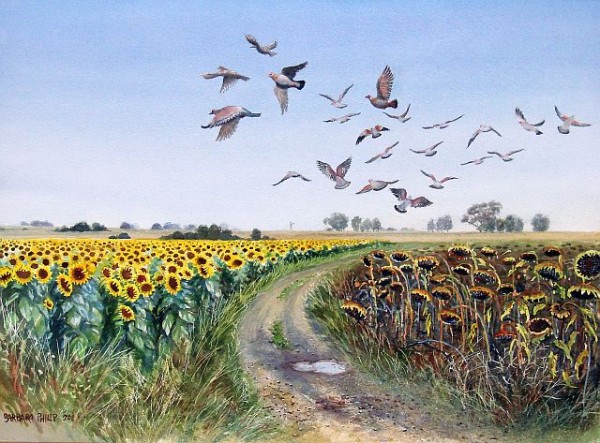
    Some orders are just beyond challenging! They are enough to make one wonder why we take on commissions. This one is for an American hunter who targets the pigeons that raid the sunflower fields of the northern Freestate.

    The fields are ready for harvesting, but the Rock pigeons descend in large flocks to eat the seeds. How dull the painting would have been with only fields ready for harvesting, as it is no doubt in reality. But this is art and needs to suggest the situation without looking like a war zone. So I have added a separate field with flowers still young, to brighten the painting and enhance the subject. It is unlikely that there would be crops at such different stages in development on any sunflower farm, but it was important for the painting.

    The sunflower farmers have no alternative but to hire hunters to come to their aid. I don’t like killing anything, but as we face the same problem with Jackal and Lynx raiding our sheep flocks; I do understand their situation. All I can do now is hope that the client will be satisfied.

    Rock Pigeons over the Sunflower Fields
    Rock Pigeons over the Sunflower Fields. Watercolour. 500 x 700 mm


  • Sheep Study Two

    Sheep Study Two

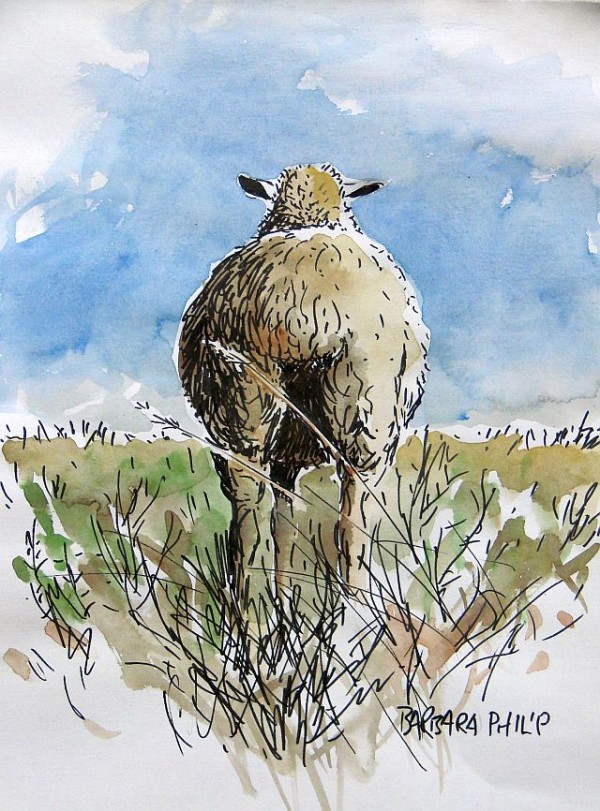
    Here are a few more sheep sketches and paintings.

    sheep sketch, "I know you're there"
    "I know you're there" sheep sketch. watercolour & ink on cartridge. A4

    I have an enormous online library of quirky and entertaining photos of sheep taken over the years; and now that photography is digital, it is so easy to capture moods and attitudes at every available opportunity, without the costs of printing them all.

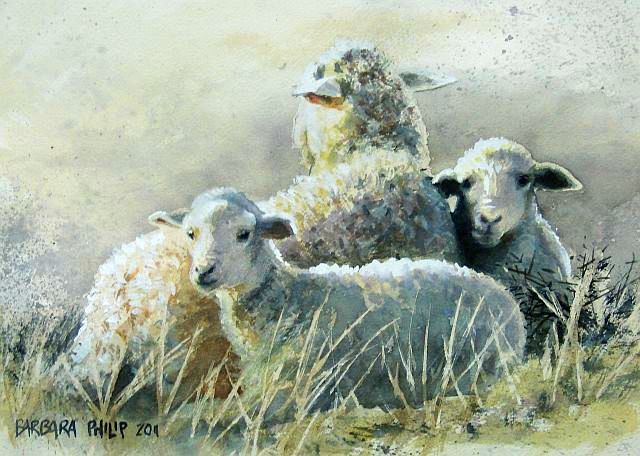
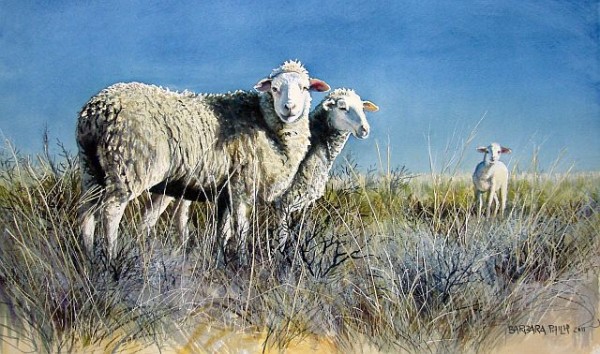
    Two Ewes & a Lamb
    'Two Ewes & a Lamb'. 350 x 250 mm watercolour.

    There was a time when I spent far too much on frequent trips to the nearest Foto-First (200 kms away)  in Bloemfontein.

    Sheep. 'Ewe with twins, cold winter morning'.
    'Ewe with twins, cold winter morning'. 325 x 240 mm. watercolour.

    But now, with the aid of a trusty printer, I am able to only print what I want to paint, at the moment when inspiration strikes.

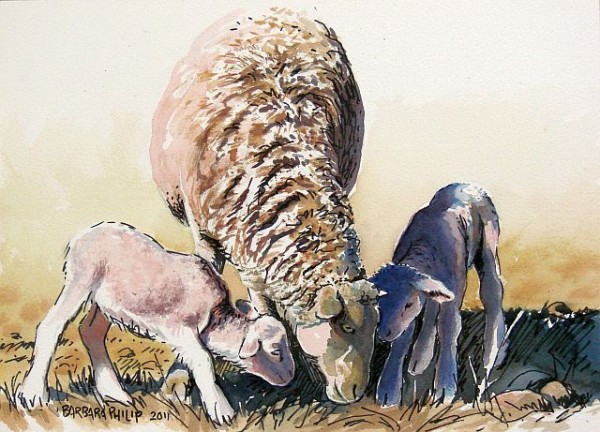
    "Ewe with twins sketch"
    "Ewe with twins sketch", watercolour and ink. 320 x 240 mm

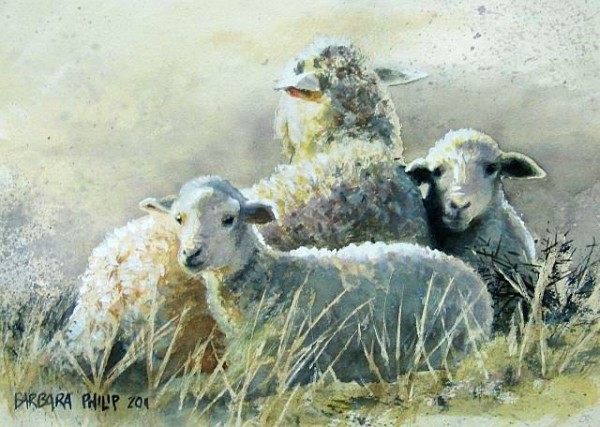
    It was difficult to choose just 4, for this set, but I really must move on to some other subject matter now. I can’t imagine there are many of you out there who are so entranced by sheep as I am, so I promise to put sheep aside for the moment!

  • Remembering the 90’s, & Bon Jovi

    Remembering the 90’s, & Bon Jovi

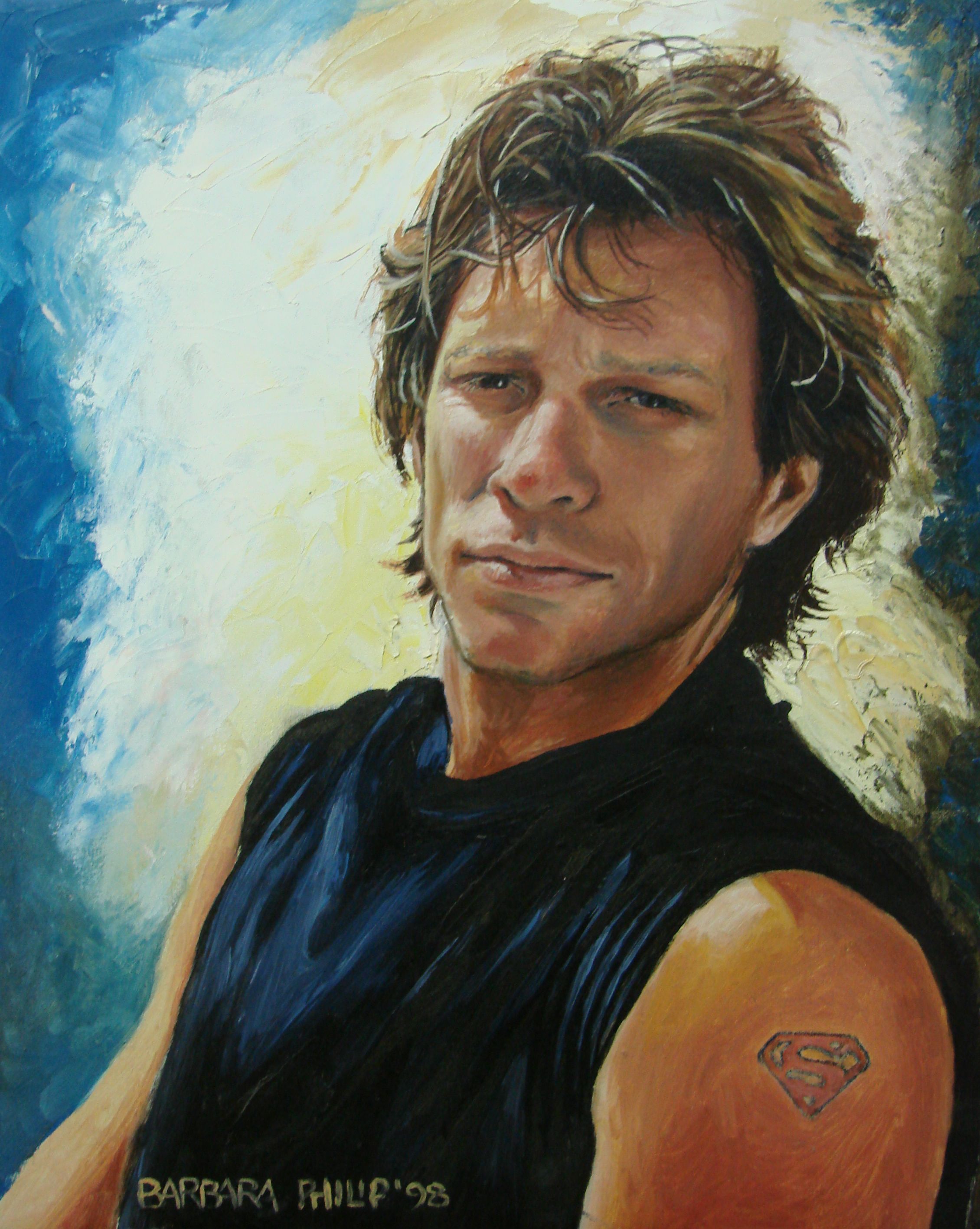
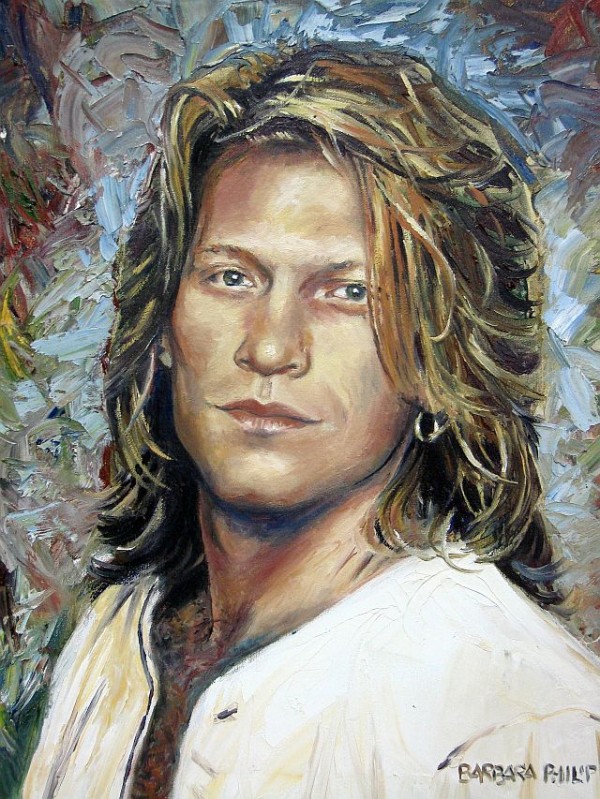
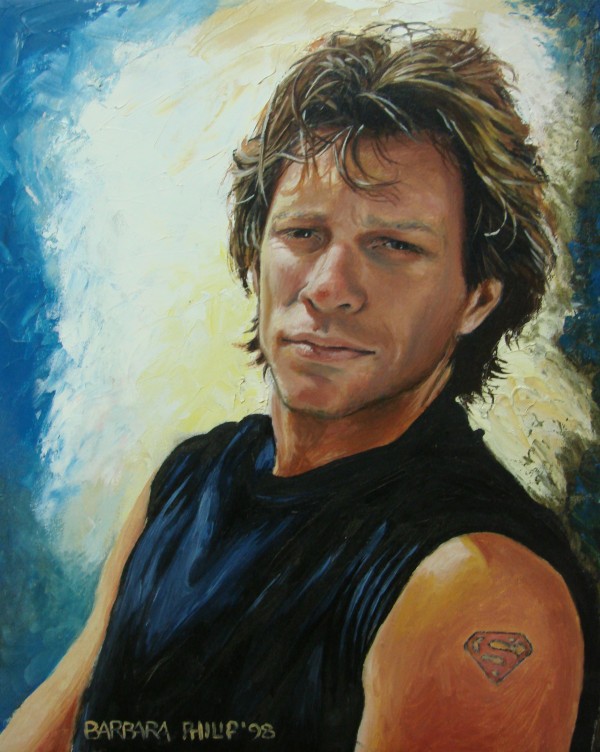
    During the 1990’s Bon Jovi became my favourite rock band and I followed them avidly. In 1995 we attended their first concert in Johannesburg. I also joined the fan club, ‘Backstage with Jon Bon Jovi’, and entered a few competitions. I sent a couple of paintings which Jon and his wife, Dorothea apparently received, according to his Mum. At that time Jon’s Mum ran the Fan Club. I won an autographed T’shirt in one competition, and collected all the Albums of their music. But during the next ten years, although I continued to follow their music and enjoyed the odd appearances on TV,  gradually the fervor faded and I gave the subscription money to a worthwhile charity instead. I even forgot about the two oil portraits that I’d done during that heady decade; until recently when a friend asked about them, so here they are:

    portrait of Jon Bon Jovi, 1995
    Jon Bon Jovi, 1995. oil on Canvas 450 x 550 mm
    Portrait of Jon Bon Jovi. 1998
    Jon Bon Jovi, 1998, oil on Canvas 550 x 450 mm.


  • Beautiful Bokmakierie

    Beautiful Bokmakierie

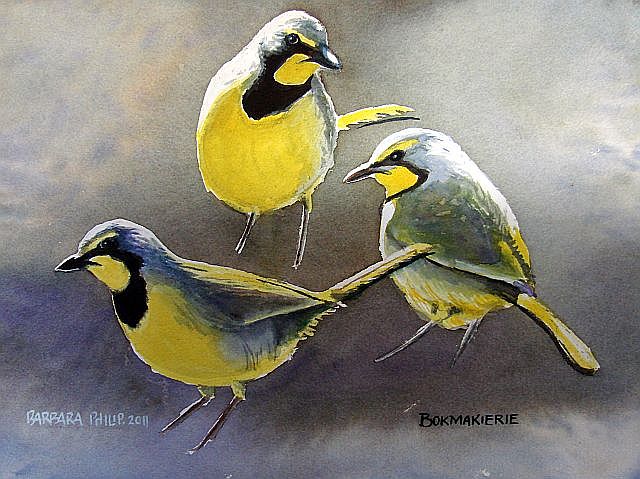
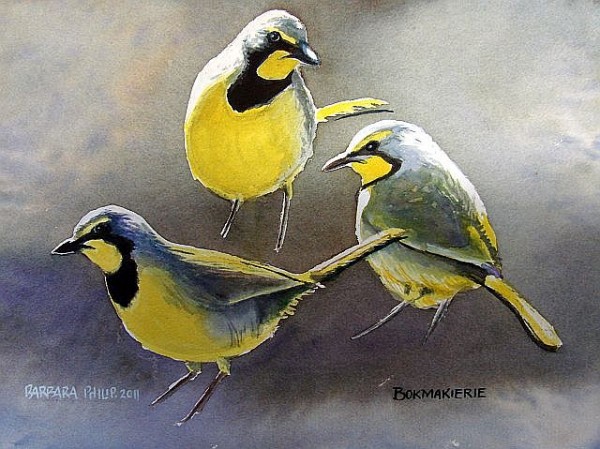
    The beautiful Bokmakierie belongs the Bush Shrike family and is such a colourful resident of our otherwise drab winter garden. Although they live and nest here, it is seldom that I am able to photograph them. How lucky I was, and of course a sketch was inevitable !

    Bokmakierie
    'Bokmakierie'. watercolour. 340 x 250 mm


  • Old World Vulture – visions

    Old World Vulture – visions

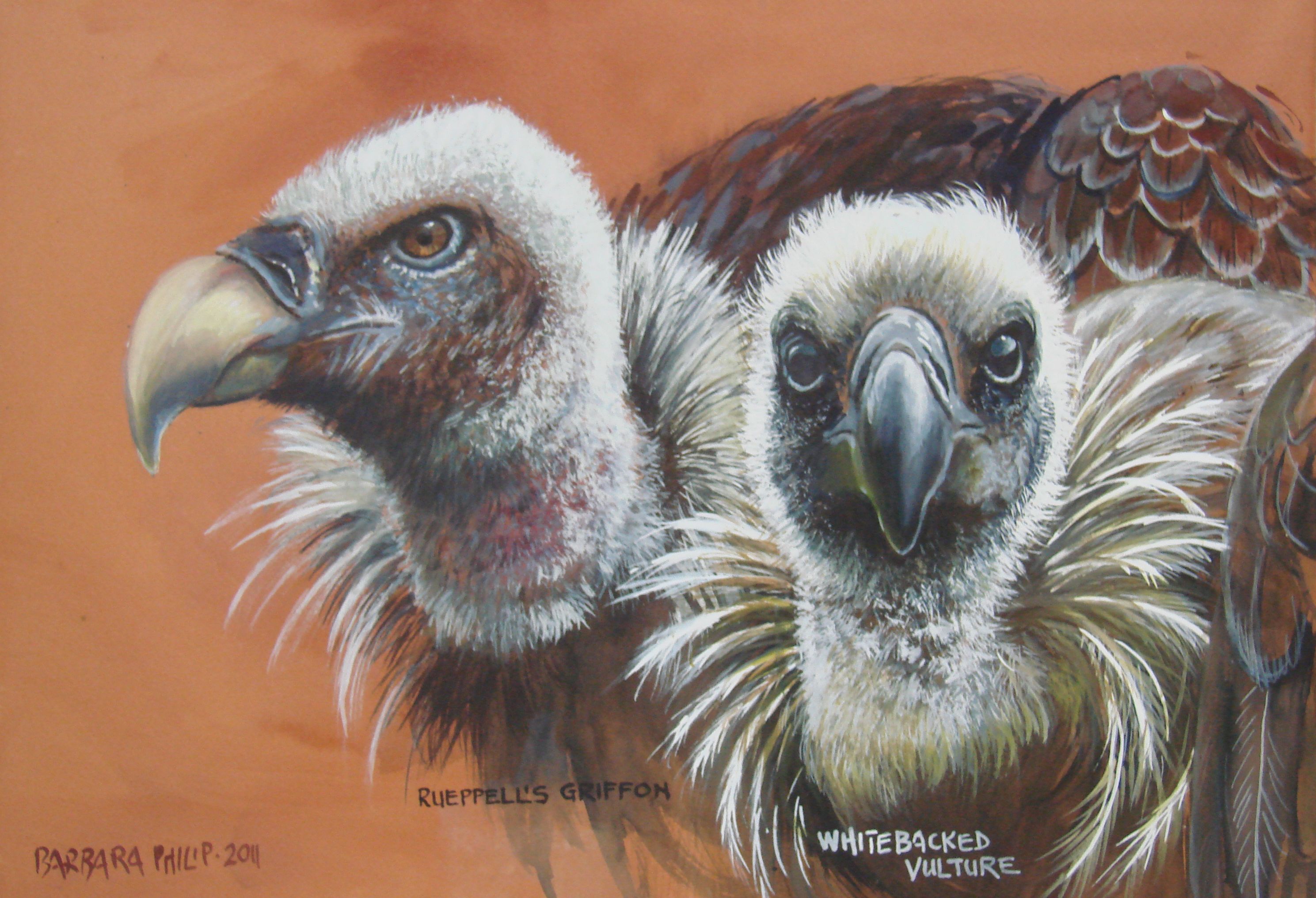
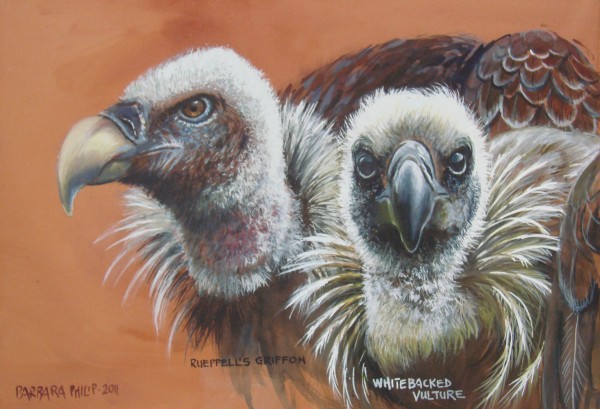
    Rueppell's Griffon & Whitebacked Vulture
    Rueppell's Griffon & Whitebacked Vulture. 290 x 420 mm.

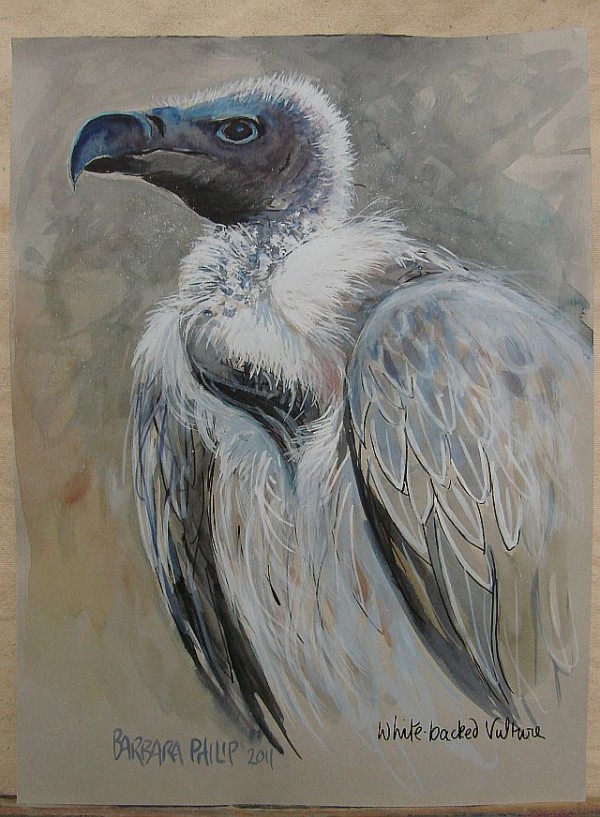
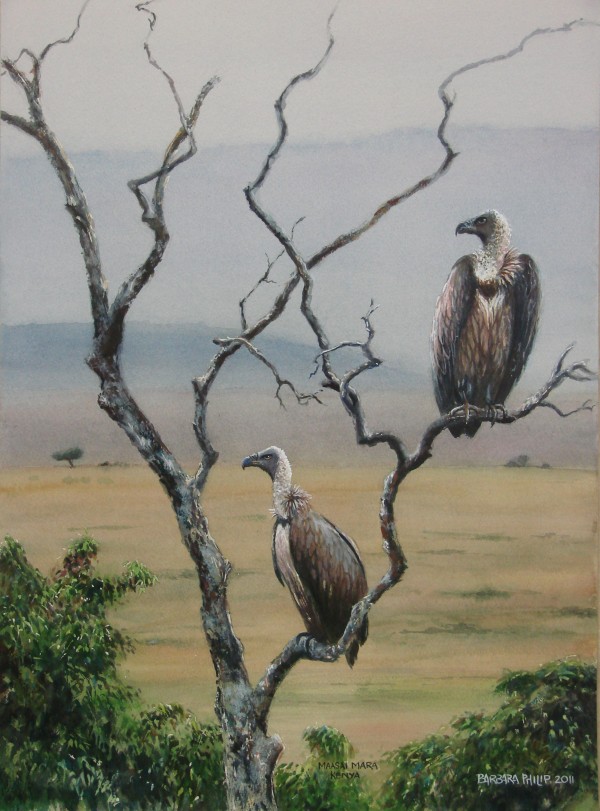
    One of the painting commissions from the client who took photos in the Maasai Mara National Park in Kenya, was of the Whitebacked Vulture.  (It was not the Serengeti as I first thought.)

    Sketch of Whitebacked Vulture
    Sketch of Whitebacked Vulture. 310 x 230 mm.

    This painting inspired me to make a couple of other studies that are posted here. Researching these vultures revealed many amazing facts about them. The Rueppell’s Griffon, is said to be the highest flying bird, with a recording of 11,000 metres or 36,100 feet, and their wingspan reaches 2.6 metres or 8,5 feet!!
    Maasai Mara Whitebacked Vultures
    Maasai Mara Whitebacked Vultures. 700 x 500 mm sold.

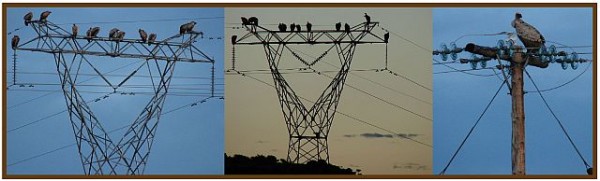
    Here on Silvermere, we have the Cape Vulture, which I haven’t  painted yet. These vultures come for the carcasses of sheep and cattle that die in the veld. We sometimes have flocks of about 50 on one carcass. It is wonderful to have them now, as they have been absent for many many years. We still hear reports that they were becoming an endangered species, but at least we have a flock that we see from time to time. Here are a couple of photos that I took of our Cape Vultures that roost on the power lines nearby.

    Cape Vultures, photos
    Cape Vultures (photographs)


  • Serengeti Cats

    Serengeti Cats

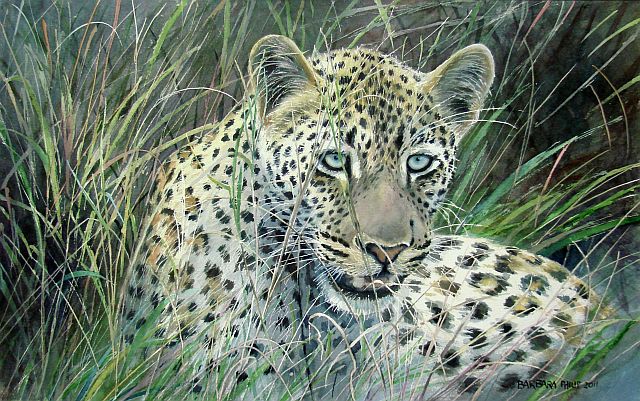
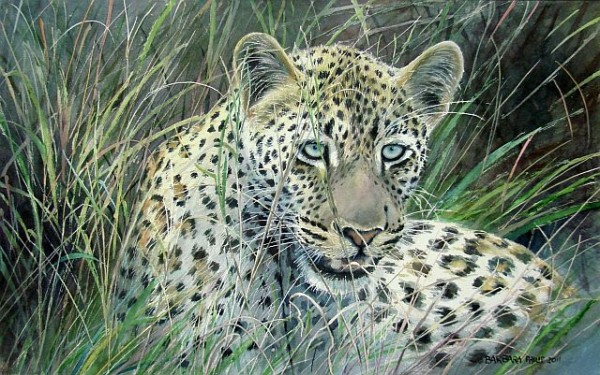
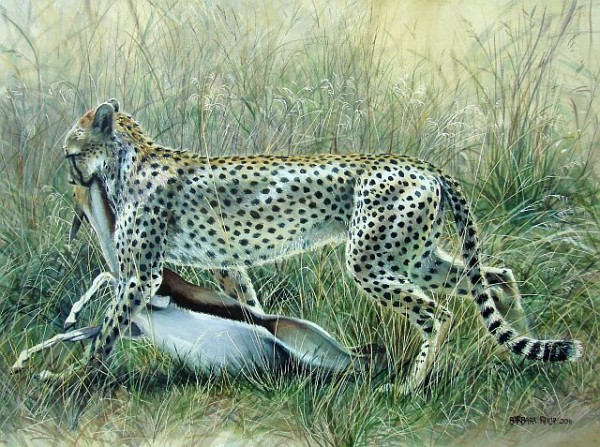
    After a friend visited the Serengeti National park last year, he asked if I’d paint some of the photos that he took while he was there. These were 3 of them.

    Serengeti leopard
    Serengeti leopard, 500 x 350 mm. sold

    The challenge, more than the cats themselves, was the grass. There are some ways to simplify painting grass, but as grass featured in these three so prominently, it was important to avoid the short-cuts. It makes me think of all the grass that covers Silvermere at the moment, since the good rains of the past four months. The sheep get lost amongst it and looking for them is  quite difficult. When we walk in the veld, grass seeds work their way into our socks if we don’t wear very long trousers and high boots. Looking out over the vales of waving grass, it really looks more like cattle country, than karoo veld; and is reminiscent of the tall savannah-grassveld in Rhodesia (Zimbabwe) where I grew up.

    Serengeti cheetah & kill
    Serengeti cheetah & kill. 700 x 500 mm. sold
    Serengeti Lion
    Serengeti Lion, 500 x 350 mm. sold

    I would like to make a correction here, since speaking to the client. These cats were all photographed in the Kenyan side of the Reserve, which is called the Maasai Mara National Park.


  • A quiet country road after the rain.

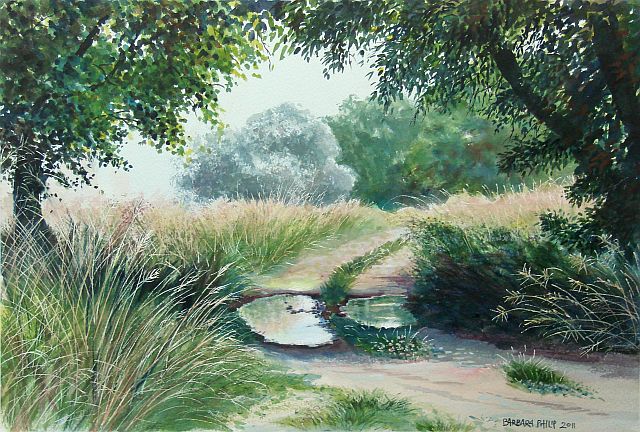
    A quiet country road after the rain.

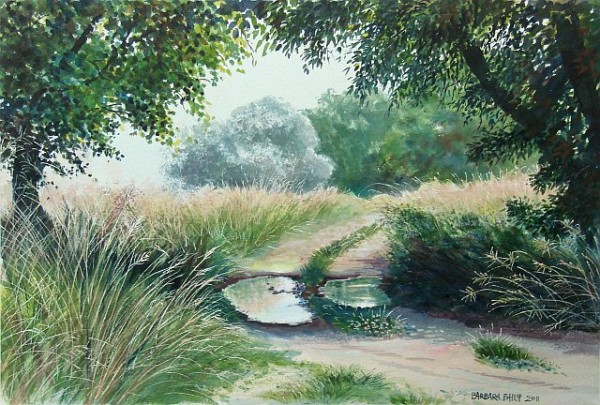
    On the return from our brief trip to Johannesburg to see John and Sue and Neil, we photographed lots of sunflowers in the fields alongside the N1.  There is a possible upcoming order that includes a sunflower field. We drove off down a few linking farm roads and this perfect little scene was one that we passed. I found it particularly captivating and inspiring to paint.

    A quiet country road. Watercolour. 500 x 350 mm


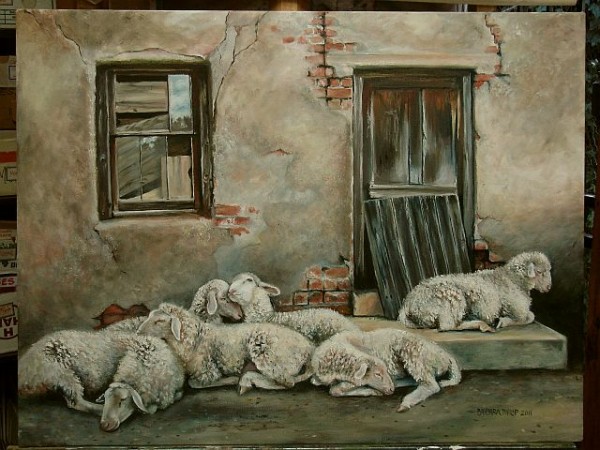
  • Sheep study one. Resting against the workshop wall.

    Sheep study one. Resting against the workshop wall.

    After browsing through all my files of sheep photographs, I was itching to paint sheep again. Even though there is a limited market for sheep in the art world, I am absolutely enchanted by them and all the painting possibilities. I would love to paint an entire series, but realistically it is probably not a good idea! However, since when were painters driven by good sense? So call me crazy, but here is the first.
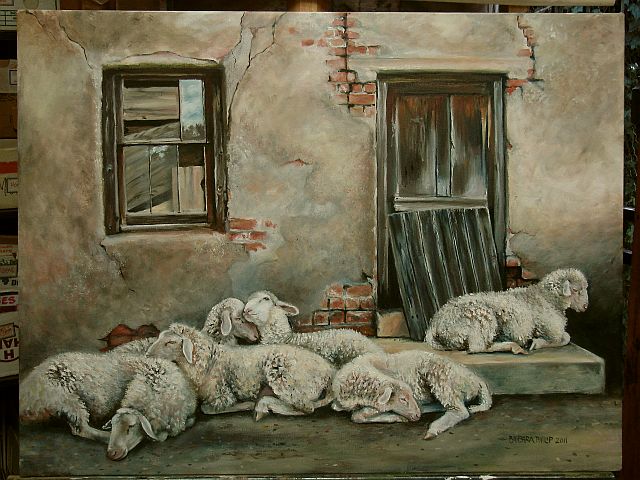
    'Sheep resting against the workshop wall'. Oil on canvas, 850 x 650 mm.

    In the long hot days of summer when a woolen winter coat is not really appropriate, these sheep find the wall of the workshop nice and cool for their midday siesta.